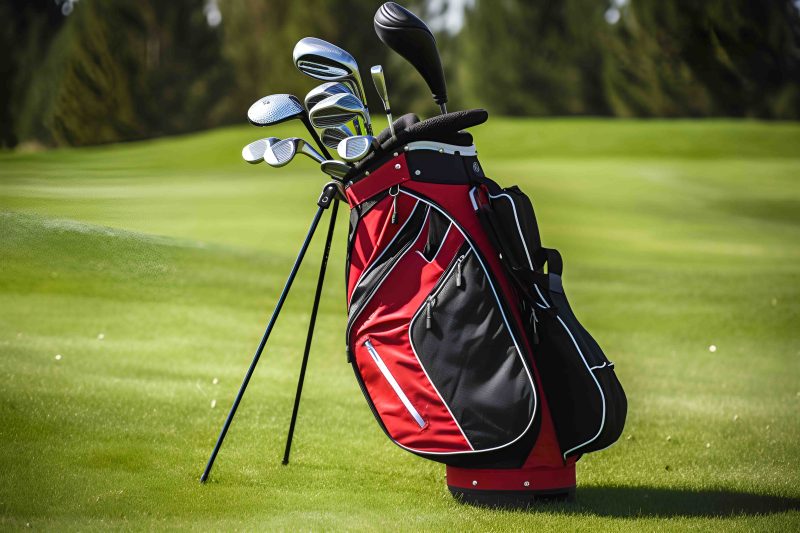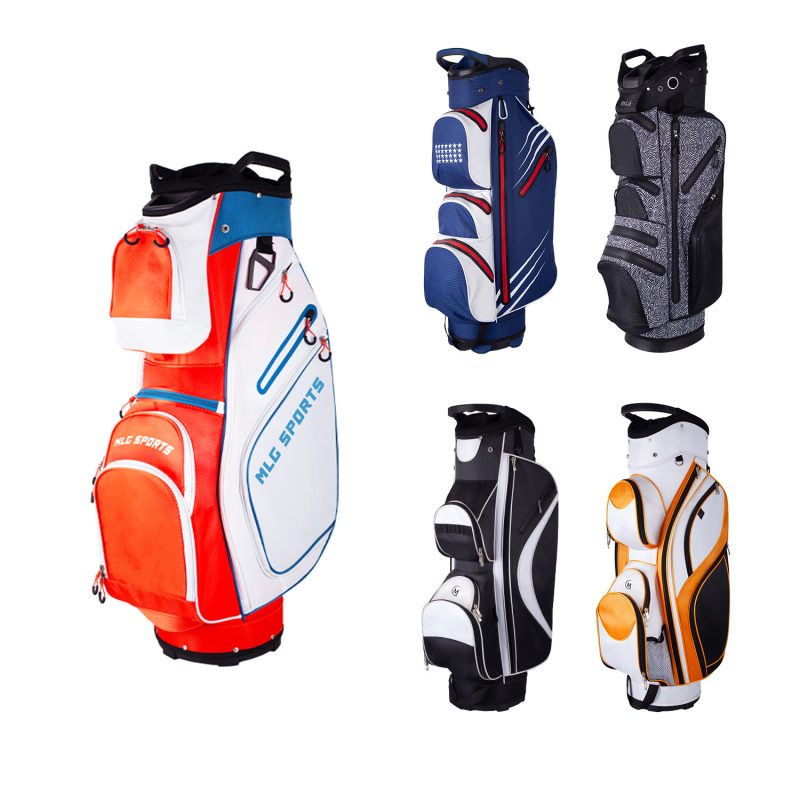
Golf is both a sport and a lifestyle practice. All golfers, from casual to professional, need an appropriate golf bag for their games. But a good golf club bag assists you even better by providing comfort for your session, protection for your clubs, and easy transport out on the course. That said, this will help you walk through the various types of golf bags available and guide you toward the one that best fits your needs.

Importance of Choosing the Right One

As far as the best golf bag for you goes, it’s not just about looks; it’s about usefulness and comfort. A bad bag choice can be inconvenient, cause unwanted muscle strain, and even damage your golf clubs. There is a wide variety of bags, from lighter-draw bags to more professional bags.

Types of Golf Bags

A good golf bag will save you time, help you stay organized, and provide more comfort on the course. From minimalist carry bags for the walking golfer to fully featured cart bags, every type has benefits depending on your playing style and needs.

Carry Bags: These bags are lightweight and designed for golfers who walk the course. They have two shoulder straps that distribute little weight and allow for comfortable carrying without burden. Most carry bags will not have much storage. However, many have designated pockets for golf balls, tees, and smaller accessories.
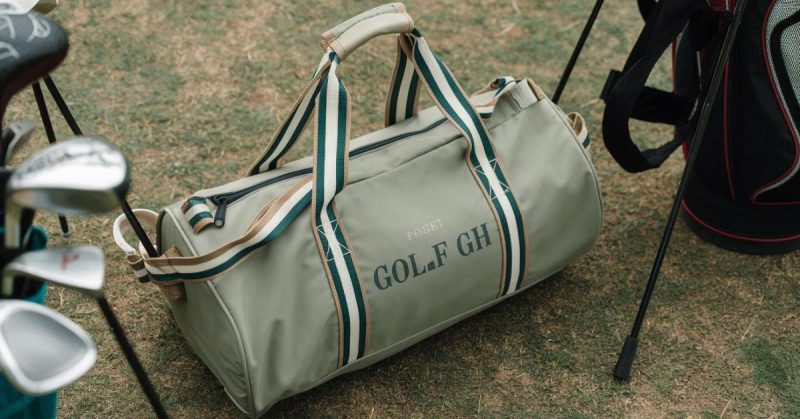
These bags are fantastic for casual rounds and players who want to maintain mobility without a golf cart.

Stand Bags: Stand bags have legs built into them, allowing them to stand on virtually any terrain. This design makes it easy to remove the golf clubs without laying the bag on the ground. Stand bags weigh slightly more than carry bags but provide more room for rain covers, towels, and water bottles.
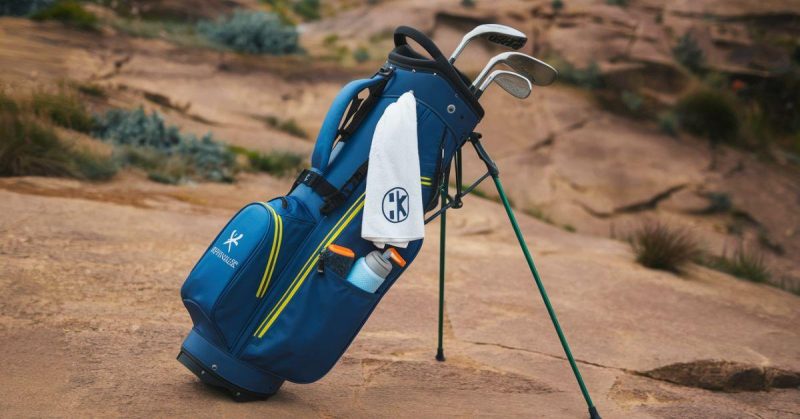
They’re perfect for golfers who haul their bags but want a bit of added ease and organization.

Cart Bags: These bags are designed for golfers who often ride in a golf cart around the course. They take up more space but offer additional storage. These bags feature multiple pockets, including dedicated sleeves for valuables, rangefinders, and drinks. Unlike stand bags, cart bags do not have retractable legs and are designed to be supported by a golf cart for the entire round.
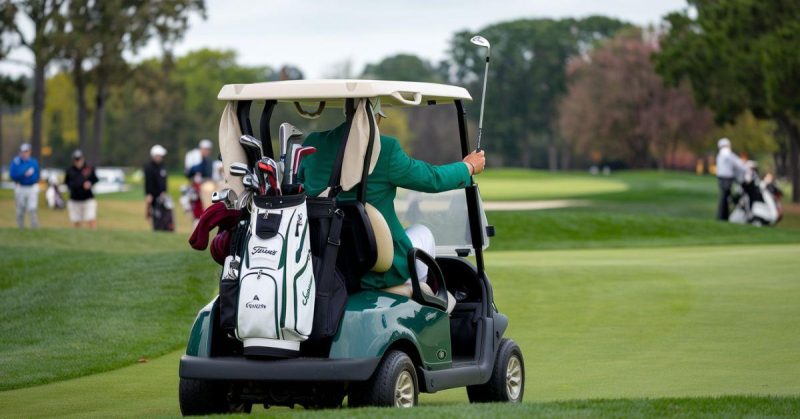
These are great perks for the storage of their gear when they ride instead of walking as well.

Tour Bags: Staff bags, or tour bags, are the ultimate choice for pros. These are the biggest, heaviest golf bags that do the best job justifying the space one buys and the premium materials that stay between them and their bag. Tour bags are very much out there behind the scenes and on a pro tour, caddied for their player and made for those who need plenty of compartments to sort their golf clubs and ceramic golf accessories.
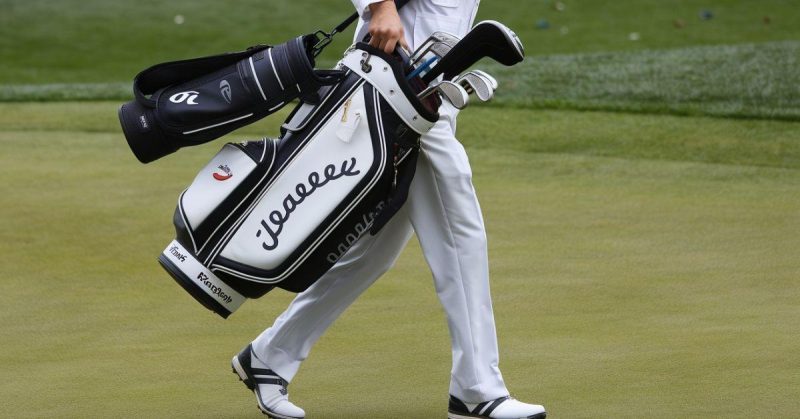
These bags are sweet to protect and carry, but not very useful to a casual golfer without a caddy (heavy).

Sunday Bags: Also known as carrying bags, these are a minimalist solution that appeals to golfers looking for a lightweight alternative for quick rounds or practice sessions. This is small, carries successfully, and often carries an exact number of golf clubs. These are well-suited for quick runs at the driving range or when fewer golf clubs are needed.
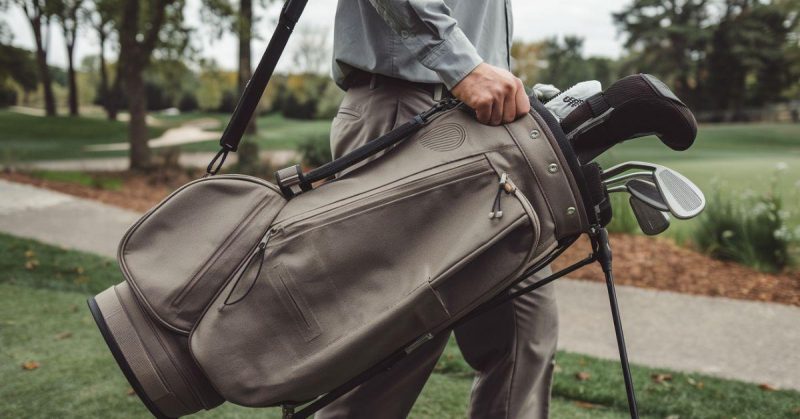
Some contemporary Sunday bags incorporate a stand or small pockets, but they all have relatively simple designs.

What to Look for When Buying a Golf Bag

What is the best golf bag for you depends on several factors, such as how you play golf and the most essential features. Whether walking the course or riding in a golf cart, a bag that balances weight, storage, and durability will boost your game.

1. Weight and Portability: If you plan to walk the course, you want a lightweight golf bag with comfortable straps. Stand and carry bags are great for this: They’re easy to carry around without losing practicality. A properly balanced bag with comfortable ergonomic straps will help minimize fatigue over long rounds.

2. Storage options: Different forms of golf bags come with different storage options. The more accessories you carry, such as extra balls, gloves, and rangefinders, the more you should consider cart or tour bags with pockets. An organized golf bag will help keep your gear accessible while you’re on the go during play.

3. Quality: An ideal golf club bag should be made from durable leather or vinyl material that is easy to clean and maintain. Waterproof options will benefit those who play in unpredictable climates. A good bag is worth the investment; it protects your clubs and makes them last longer.

Why JTS Sports Golf Bags?

JTS Sports creates personalized golf bags that serve teams and organizations along with corporate groups in their events. JTS builds its mass-customized product range by delivering high-quality functional bags designed for individual branding specifications. The bags from JTS meet perfect practicality standards combined with durable design while presenting stylish options for training tournaments and promotional events.

FAQ’s

What is the best beginner’s golf bag?

Stand or carry bags are also favorable for beginners since they are lightweight, easy to carry, and provide the right amount of storage without causing excess bulk. Make sure you choose the bag best suited to your style of play.

What are the top features to consider when buying a golf bag?

The essential features to focus on are weight (features), capacity (pockets, spaces), strength (lifetime), comfort (e.g., padded straps, ergonomically shaped), and weatherproofing. If you have a lot of accessor­ies, opt for a bag with a lot of pockets.

Is an expensive golf bag worth the money?

Tour bags, a variety of high-end golf bags, offer superior materials, increased safety, and extra pockets. Investing in a suitable bag ensures longevity and convenience for a regular golfer.

Conclusion

This article narrates that various players will require a golf bag designed to suit their playing style, storage space, and usability. Whether you choose a lightweight stand bag, a more oversized tour bag, or a slick cart bag, the right bag will improve your golfing experience.

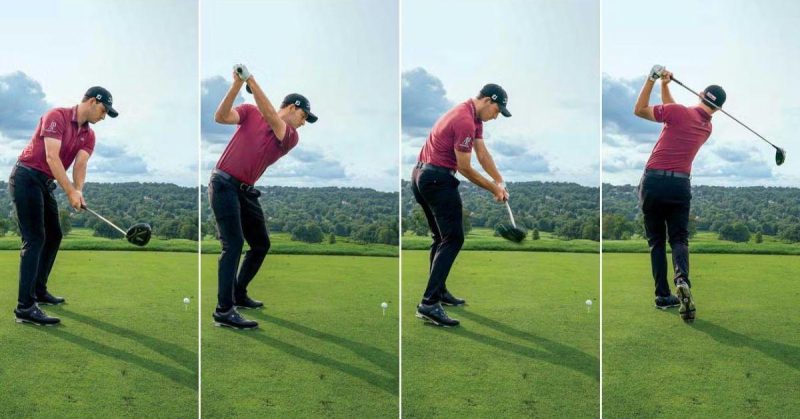
Golf is a sport of precision, power, and consistency. Whether you are a beginner taking your first steps in golf or an advanced player seeking to fine-tune your skill sets, mastering the golf swing is the key to forging more tremendous success. This ultimate guide provides step-by-step golf swing tips from novice to advanced levels to help you. By the end of this article, you’ll have insight into improving your power, accuracy, and consistency on the course.

Understanding the essential elements of a golf swing

Here are some basic golf swing tips before we get to some specific tips. The golf swing has four crucial phases.

1. The Setup: The stance, grip, and posture provide the template for a good swing.

2. The Backswing:  You turn your body at this phase and bring the club back.

3. The Downswing: When you go from backswing to impact

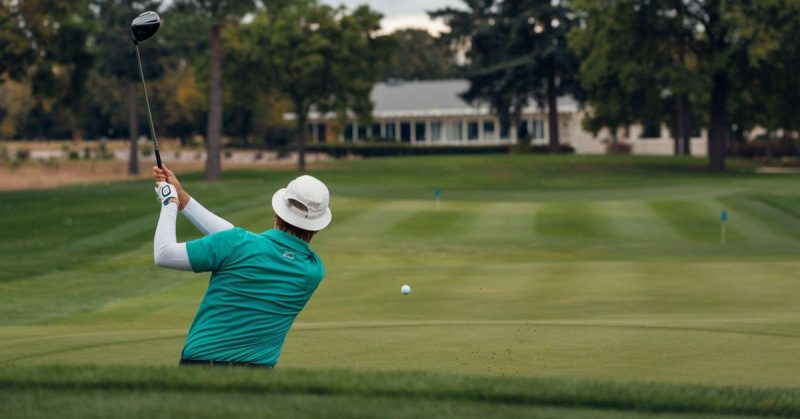
4. The Follow-Through: The action of the swing after contact with the ball.

These phases play a significant role in determining your shot’s success. Let’s explore each step and provide actionable tips.

Golf Swing Tips for Beginners

The following golf swing tips will help beginners start well.

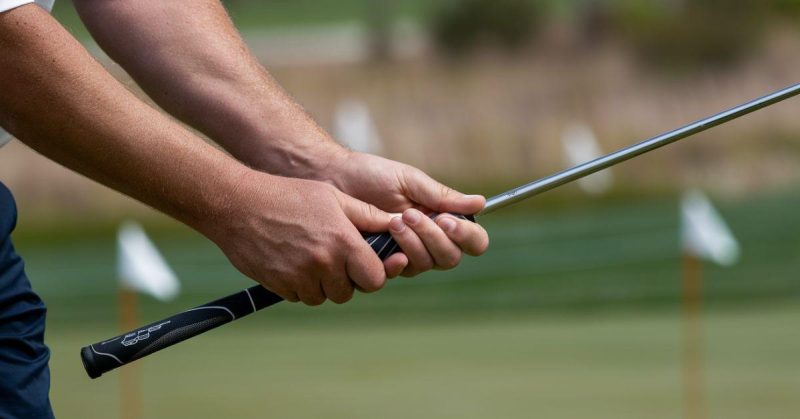
Master the Grip: A proper grip is the underlying basis for a good swing. People with smaller hands benefit from an interlocked grip; however, users with larger hands achieve better results with overlapping grip motion. Hold your stick with a controlled firmness for control without restricting movement throughout. A rigid grip reduces flexibility as well as accuracy.

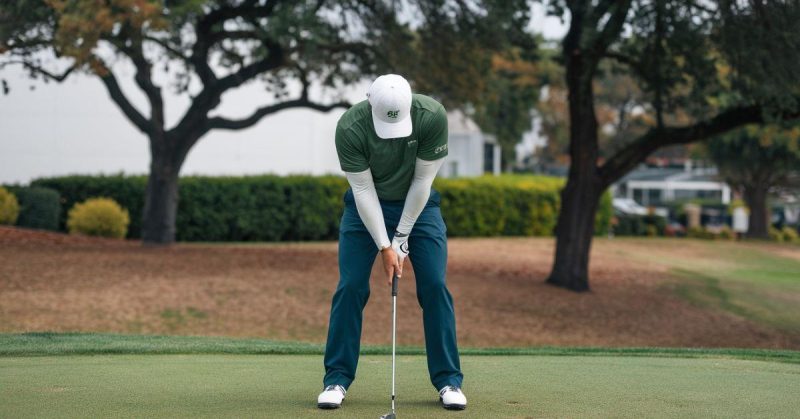
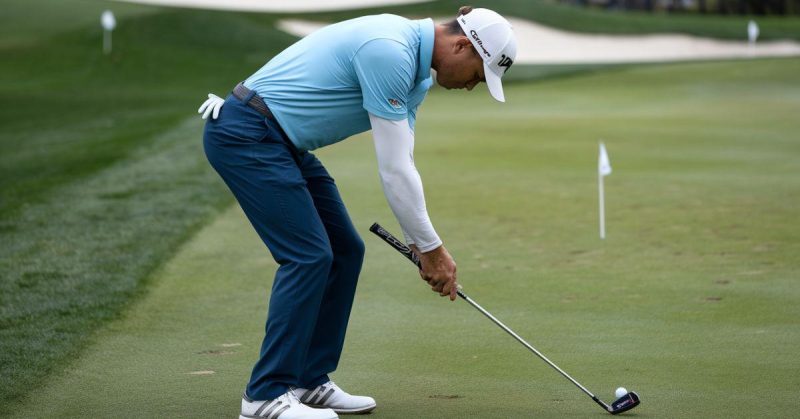
Focus on Your Stance: Maintaining a correct stance helps you achieve balance and stability. Position your body with your feet at shoulder distance and send equal weight between both lower limbs. This requires straight posture while slightly bending knees and performing a hip-tilting movement. When you stand steady, your swing becomes more assertive, and your control improves.

Align Your Body: Accurate shots depend on proper alignment throughout the process. Your feet, hips, and shoulders must stay aligned directly with the target direction. Alignment stick practice and club guidance permit golfers to build consistent positioning.

Start with a Half Swing: New golfers should practice only half swings before progressing to more significant movements to maintain control of their shots. Your swing duration should increase step by step based on your growing competence and improved coordination ability.

Keep Your Eye on the Ball: New players frequently fail when they raise their heads prematurely during the swing, which results in inaccurate strikes. Your head needs to stay stable alongside your focus on the ball from start to finish during your swing to achieve accurate and consistent hitting.

Advanced Golf Swing Tips

Professionals focusing on swing improvement gain better accuracy and power during their gameplay. Several superior techniques will help you take your performance to the next level.

Optimize your weight shift: Weight transfer is crucial in creating powerful golf swinging motions. Move your weight to your back foot during the backswing before transporting it smoothly towards the front during the downswing. A strategically managed weight shift produces power through contact, resulting in clean, solid ball impact.

Rotate Your Hips and Shoulders: A complete shoulder rotation during the backward swing produces torque, which converts directly to hitting power. Begin your downswing with hip movement that allows your upper body to move naturally behind. This precise movement between steps helps create balance, which boosts club speed.

Maintain a Lag in Your Downswing: The angle between your lead arm and the club shaft during your downswing movement is known as lag. Retaining a steady angle from start to finish, except during the last moment of impact, is key to maximizing clubhead speed and distance control. The early release of lag results in shots with reduced power.

Focus on Clubface Control: The position of the clubface at impact determines ball direction. To hit consistent, straight shots, practice squaring the clubface at impact. Drills and slow-motion swings can help refine your control and improve shot accuracy.

Use Your Lower Body for Power: Many advanced players rely too much on their arms, reducing efficiency. Engaging your legs and core enhances stability and generates more power. Pushing off the ground with your back foot during the downswing helps drive energy through the shot.

Analyze and Adjust: Refining your swing requires continuous self-analysis. Use video recordings or launch monitors to spot inconsistencies and make necessary adjustments. Working with either a coach or trainer brings essential feedback, which aids progress and development.

Common Mistakes to Avoid

Read the following list, which includes several typical mistakes and their correction methods.

1. Over-Swinging

  • Hitting the ball aggressively tends to result in losing control of the ball’s flight path.
  • Creating a managed swing motion is more important than relying solely on strength.

2. Poor Posture

  • Swing mechanics become disrupted when you stand too upright or slouch during swing execution.
  • Your spine should stay in a straight position during the complete swing motion.

3. Rushing the Downswing

  • A quick downswing produces misalignment that leads to lousy contact positioning.
  • Allow the club to naturally build speed during its motion before striking the ball.

4. Ignoring the Follow-Through

  • Your swing will deliver a weak shot when you do not complete your follow-through correctly.
  • Complete your swing facing the target with your chest while resting on your lead foot.

Drills to Improve Your Golf Swing

Several drills exist to improve your swing performance, which follow next.

Towel Drill: Swing your arms while keeping the towel in place, which rests under each armpit. This exercise helps both arms move together and maintains swing coordination.

Pause at the Top: Wait 2-3 seconds at the end of your backswing before initiating your downswing movement. This improves tempo and control.

Impact Bag Drill: Utilize an impact bag to learn correct club-hand positioning when making contact.

One-Handed Swings: Left-handed golfers should practice single-handed swings to develop wrist flexibility while controlling their golf club face.

The Mental Aspect of Golf

Concentration is equally vital as physical ability in golf. Following are three primary techniques to improve concentration and confidence during golf.

  1. You need to see yourself achieving the perfect shot before making your swing.
  2. You should maintain positive thinking rather than focusing on unsuccessful attempts. Focus on the next one.
  3. Deep breathing serves as an effective method to control nervousness and maintain attention throughout a round.

Why Select JTS Sports?

JTS Sports delivers high-quality personalized sports equipment for teams through their mass customization program which meets specific organizational requirements. JTS creates specialized performance-enhancing sports equipment that allows athletes and sports teams to receive equipment matching their distinct needs. JTS implements tailored solutions for both training and competitive purposes to boost athletic performance quality.

FAQ’s

What plays a significant role in creating a complete golf swing?

A perfect shot requires the proper execution of four elements: setup, followed by a backswing, then a downswing, and finally, follow-through.

How do golf novices improve their golf swing?

New players should concentrate on grip, stance, alignment, and controlled swings for improved accuracy.

What common mistakes should golfers avoid?

Over-swinging, posture, and rushing the downswing are all conducive to losing consistency.

Conclusion

Learning the golf swing requires dedication, continuous training, and steady persistence. These golf swing tips benefit players by allowing them to become more experienced in advancing their power, accuracy, and consistency in their golf game. Try different approaches because each player follows their path toward mastery, but stay open to discovering unique ways that work for you. The path to golfing confidence will open through commitment alongside proper skills, which will lead you toward developing your abilities.


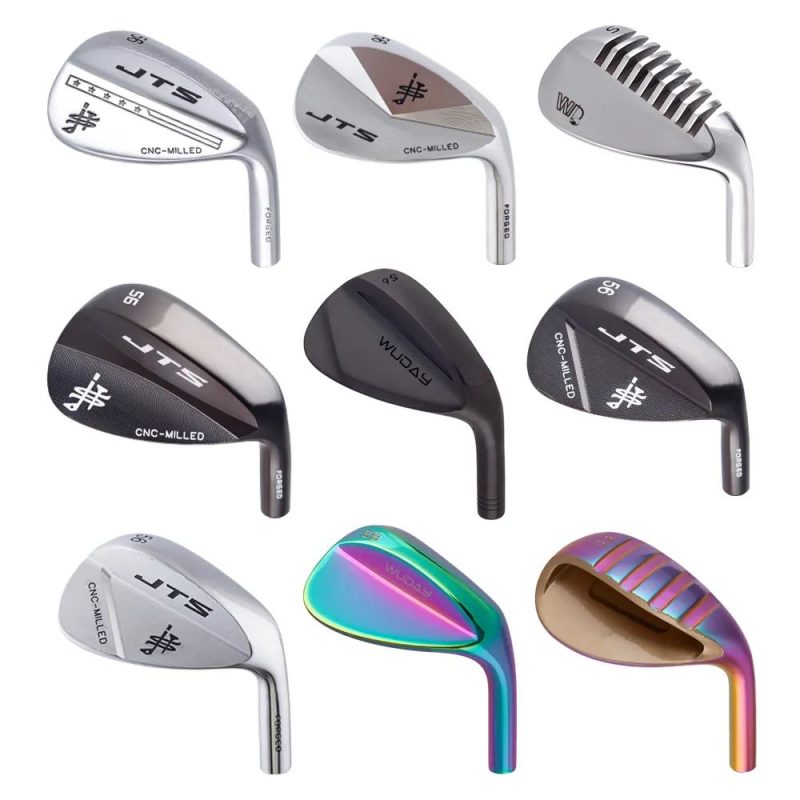
Customizing a golf wedge involves several steps that can help you tailor the club to your specific needs and preferences. Here’s a guide on how to go about it:

1.Determine Your Needs and Preferences:

Start by identifying what you want to achieve with your custom wedge.

Do you need it for a specific shot type, such as bunker shots or chipping?

Consider factors like loft angle, bounce, grind, and even the feel and weight of the club.

2.Choose the Right Manufacturer:

Research golf equipment brands that specialize in custom wedges.

Look for one that aligns with your style and preferences.

3.Select Your Base Model:

Once you’ve chosen a manufacturer, select a base model wedge that you can then customize. Manufacturers often have a range of models with different head shapes, materials, and technologies.

4.Adjust the Loft Angle:

The loft angle determines how high the ball will fly.

Customizing the loft can help you achieve more precision and control over different types of shots.

Decide if you need a higher or lower loft and make the adjustment accordingly.

5.Adjust the Bounce:

Bounce is the amount of club sole that contacts the ground at impact.

It’s crucial for bunker shots and playing out of rough. Customize the bounce to suit the type of terrain you frequently play on.

6.Choose the Grind:

The grind, or the shape and angle of the sole and leading edge, affects how the club interacts with the ground.

Manufacturers offer various grind options optimized for different conditions and shot types. Select the grind that best fits your game.

7.Personalize the Look:

Customize the look of your wedge by choosing the color of the paint fill, stamping your initials or a logo, and selecting a unique grip.

This adds a personal touch and can also help distinguish your wedge from others in your bag.

8.Order and Test:

Once you’ve made all your selections, place your order with the manufacturer or a trusted custom golf equipment specialist.

After receiving the wedge, test it thoroughly on the range and during actual rounds to ensure it meets your expectations.

9.Fine-Tune Adjustments:

If necessary, you can always make further adjustments to the loft, lie angle, or other specifications based on your testing and feedback.

Remember, customization can be a bit pricier than buying an off-the-shelf wedge, but it’s a worthwhile investment if it helps you improve your game and enjoy it more.

Choosing the right golf wedge involves several factors, including the type of shot you’re attempting, your skill level, and the course conditions. Here are some guidelines to help you make the right selection:

Identify the Shot : First, determine what type of shot you need the wedge for. Golfers typically use wedges for shots around the green, including chips, pitches, bunker shots, and lob shots. Different wedges are better suited for specific shots.

 Types of Wedges :

–  Pitching Wedge (PW): Typically has the highest loft among standard irons (around 45-48 degrees), making it ideal for longer approaches and full shots onto greens.

–  Gap Wedge (GW): Falls between the pitching wedge and sand wedge, with loft angles ranging from 48-54 degrees. Useful for shots that require a bit more height than a pitching wedge.

– Sand Wedge (SW): Designed specifically for bunker shots, with loft angles usually around 54-58 degrees. Provides plenty of spin and trajectory to escape bunkers and handle softer turf conditions.

– Lob Wedge (LW): The highest loft among wedges, often 60 degrees or more. Perfect for high, soft shots over obstacles or when stopping the ball quickly on the green.

Skill Level: As a beginner, start with a pitching wedge and a sand wedge. As you improve, consider adding a gap wedge and/or lob wedge to your bag for added versatility. Advanced players often carry two or all three types of wedges.

Bounce: Bounce is the angle at which the leading edge of the wedge is angled away from the ground. Higher bounce is better for softer sand or deep grass, while lower bounce works well in firmer conditions or tight lies.

Feel and Comfort:Try out different wedges to see which feels best in your hands and produces the results you’re looking for. Some players prefer heavier or lighter clubs, or ones with specific grip sizes or materials.

Course Conditions: Consider the courses you play most often. If you frequently encounter bunkers or other obstacles, a sand wedge or lob wedge may be more valuable. Conversely, if your courses are mostly flat with few hazards, a pitching wedge or gap wedge might suffice.

In summary, choosing the right golf wedge involves understanding your needs, skill level, and the conditions you play in. Experiment with different wedges and find the ones that best complement your game.

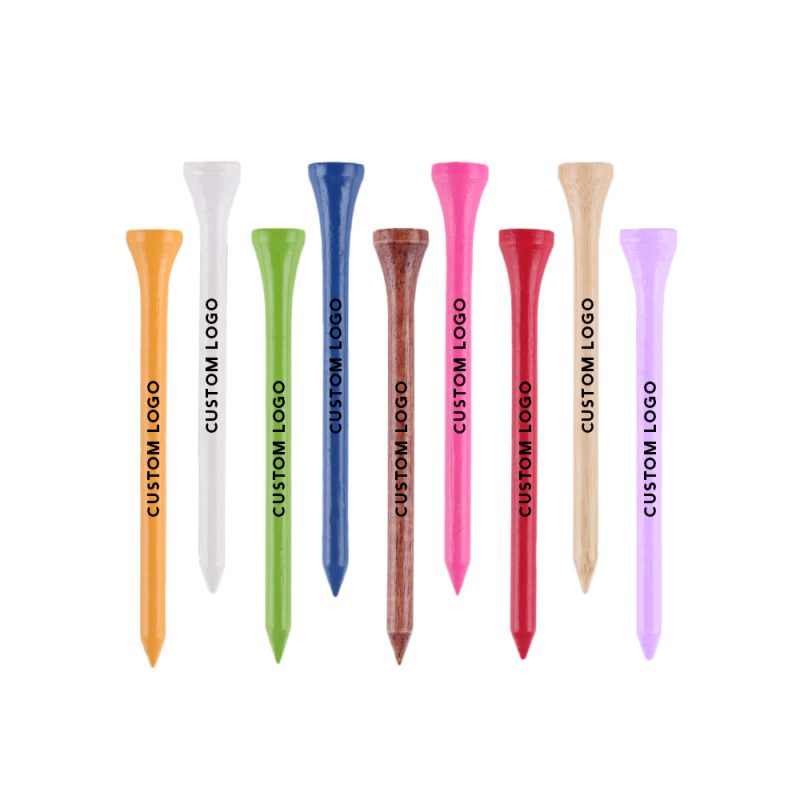
Golf, often hailed as a gentleman’s sport, is a game of precision, strategy, and finesse. While much of the focus is typically on the golfers’ swings, the courses’ landscapes, and the intricacies of the game’s rules, there is an unassuming yet indispensable element that plays a crucial role in every round – the golf tee. Despite its small size and seemingly negligible presence, the golf tee wields a significant influence on a golfer’s performance, the overall experience of the game, and even the environmental impact of the sport.

The diversity of golf tees is a testament to the continuous innovation and adaptation within the golfing industry. Wooden tees, the traditional choice for many golfers, have a rich history and a certain nostalgic charm. They are typically crafted from hardwoods such as maple or birch, offering a natural look and feel. The sound of a wooden tee breaking upon impact with the ball is a familiar and almost comforting auditory cue on the golf course. However, their susceptibility to breakage means that golfers often need to carry a sufficient supply during a round. This not only adds to the cost over time but also contributes to a certain level of waste, as broken tees are discarded on the course.

Plastic tees, on the other hand, have become increasingly popular due to their durability. Made from various types of polymers, these tees can withstand multiple shots without breaking, making them a practical and cost-effective option. Many plastic tees are designed with advanced features aimed at optimizing the golfer’s performance. For instance, some have a stepped or slotted top that helps to position the ball more precisely, reducing friction and allowing for a cleaner strike. Others are engineered with aerodynamic shapes to minimize air resistance during the swing, potentially increasing the distance of the shot. The versatility of plastic tees also extends to their color options and designs, allowing golfers to express their personal style on the course.

Bamboo tees have emerged as a sustainable alternative in recent years, driven by the growing awareness of environmental issues. Bamboo is a highly renewable resource, known for its rapid growth rate and minimal environmental impact. Bamboo tees offer a similar level of performance to their wooden counterparts while being more eco-friendly. They are biodegradable, which means that when they are discarded on the course, they will naturally decompose over time, reducing the amount of waste left behind. This makes them an attractive choice for golfers who are conscious of their environmental footprint and want to contribute to the preservation of the beautiful golf courses they play on.

The height of the golf tee is a critical factor that can significantly affect a golfer’s shot. A higher tee allows the ball to be positioned higher off the ground, providing more lift and potentially increasing the distance of the drive. This is especially beneficial when using a driver, as it enables the golfer to achieve a more optimal launch angle. However, a higher tee also requires more precision in the swing, as it can be more challenging to make solid contact with the ball. Conversely, a lower tee is often preferred for irons or when the golfer wants to keep the ball flight lower, such as in windy conditions or when aiming for a specific target on the fairway. Experimenting with different tee heights is an essential part of a golfer’s learning process, as it helps them to find the setup that best suits their swing style and the specific conditions of the course.

In addition to its technical importance, the golf tee also has a role to play in the etiquette and culture of the game. When teeing off, golfers are expected to follow certain rules and customs. For example, they should place their tees within the designated tee box area and maintain a respectful distance from other players to avoid interference. Picking up and properly disposing of used tees is also considered good etiquette, as it helps to keep the course clean and tidy. These small acts of courtesy and respect contribute to the overall atmosphere of sportsmanship and camaraderie on the golf course.

Furthermore, the golf tee can also be a source of innovation and technological advancement. Some companies are now developing smart tees that incorporate sensors and other advanced technologies. These tees can provide valuable data and feedback to the golfer, such as information about the swing speed, angle of impact, and ball trajectory. This data can be used to analyze and improve the golfer’s technique, helping them to become more consistent and accurate in their shots.

In conclusion, the golf tee is far more than just a simple piece of equipment. It is an integral part of the game of golf, influencing everything from a golfer’s performance to the environmental sustainability of the sport.Whether it’s the traditional wooden tee, the durable plastic tee, or the eco-friendly bamboo tee, each type has its own unique advantages and characteristics. As the golfing industry continues to evolve, we can expect to see even more innovation and development in the world of golf tees, further enhancing the game and the experience for golfers of all levels. So, the next time you step onto the tee box, take a moment to appreciate the humble golf tee and the important role it plays in the wonderful world of golf.

Welcome to read this guide of how to find your ideal ball from JTS Sports.

we are professional golf ball manufacturer, and we also produce other golf products.such as golf tees, golf clubs headcover, golf club and so on.

Here we are going to introduce you our high quality golf balls and dive into how to choose golf ball.

Types of golf balls

Golf balls are available in various types, each designed for specific purposes and conditions.

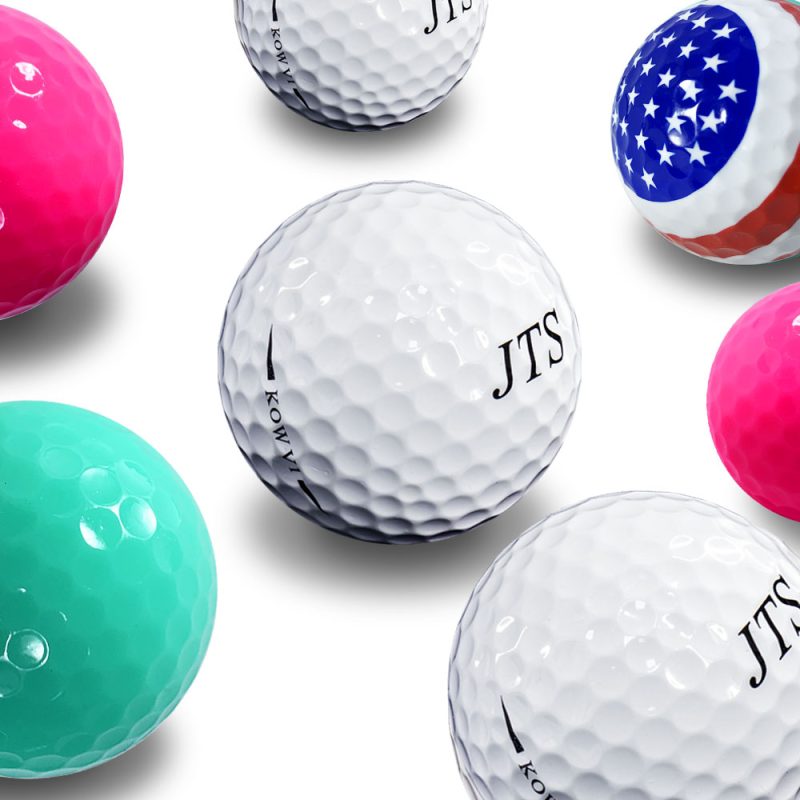
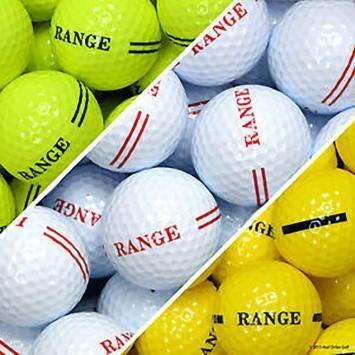
We have all kinds of golf balls, such as tournament golf balls, range golf balls, color golf balls, led golf balls and other type golf ball.

Tournament golf ball

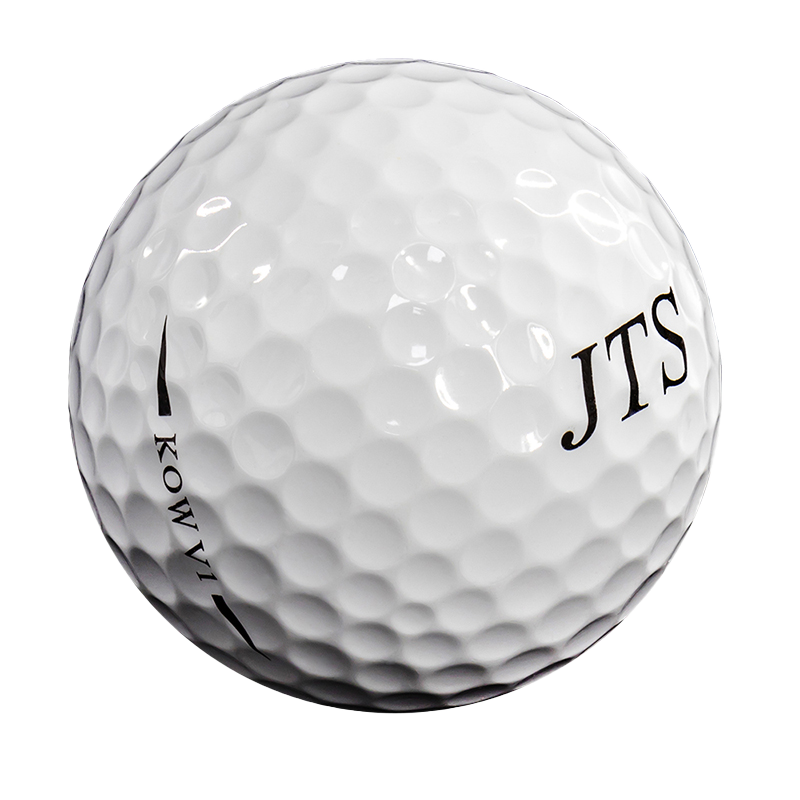
Tournament golf ball refers to a ball used in an official game of golf. These balls have specific design and performance characteristics to ensure fair and consistent play.

Tour balls are typically made of high-quality materials and have been carefully designed and tested to provide optimal flight range, spin rate and stability. These characteristics help players to better control the flight trajectory and landing point of the ball in the game, so as to achieve better results.

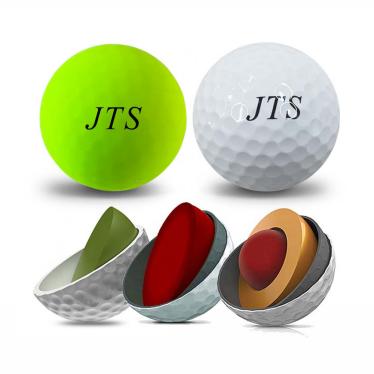
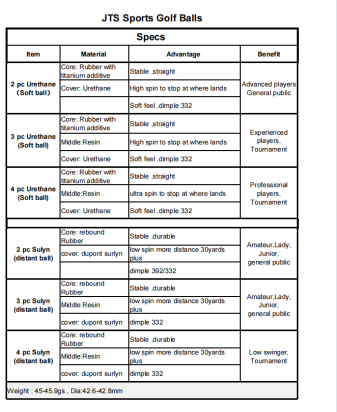
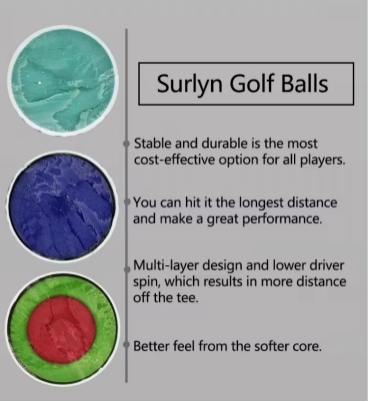
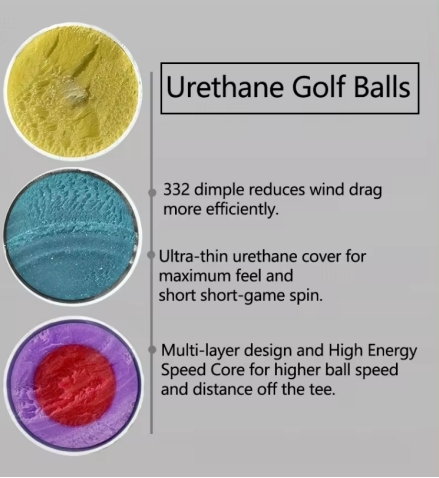
There are two material for our balls:urethane and surlyn.We have 2/3/4 layer urethane and surlyn balls.

Urethane ball is soft ball. It is high spin, soft feeling and good control.

Surlyn ball, its cover is durable and it’s capable of playing in a long distance.

Range ball

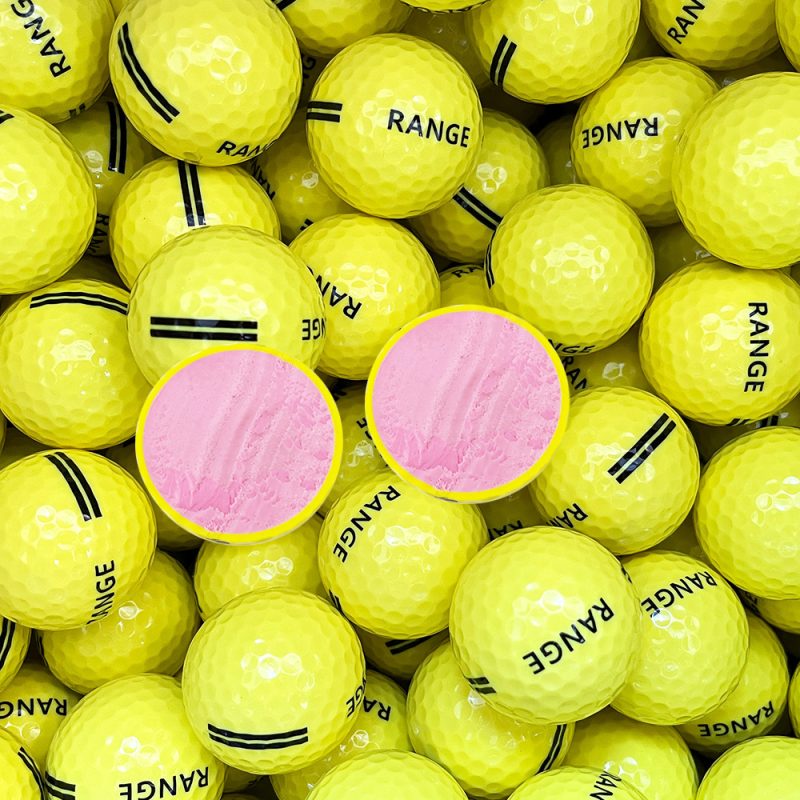
In golf terms, Range golf ball usually refers to a ball used on a driving range or practice range. These balls are used in daily practice to help players improve their skills, including swing technique, accuracy and power control.

Compared to competitive golf balls, practice range balls may be more affordable and durable because they are subject to a lot of repeated hits. While they may not have as advanced physical properties as game balls (such as flight distance, spin rate, and stability), they are good enough for daily practice.

Usually we have white color and yellow color for you choose, you can also choose custom colors.Our range golf ball have high quality,it is very durable, close to 2 layer surlyn tour ball,it suite for beginner.

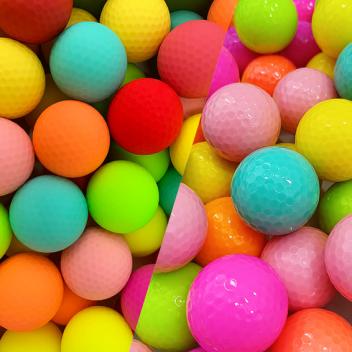
Color ball

While white is the traditional color for golf balls, colored balls are also available. These balls can be used for practice or casual play, as they are easily distinguishable from standard white balls.We can support custom color what you want.Just tell us what color you like,we will according to Pantone card to adjust your color.

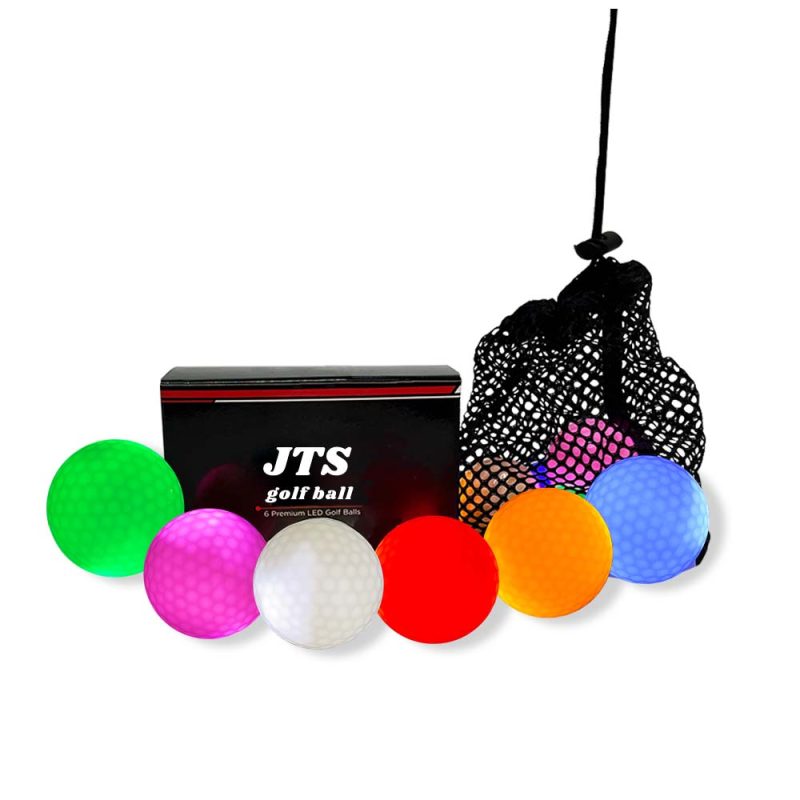
LED golf ball

LED golf balls are golf balls that are equipped with LED lights, which allows them to emit light and create a unique visual effect. This feature makes LED golf balls particularly suitable for night practice or low-light conditions, as they can help players better track the ball’s trajectory and improve their skills.

We have different type for led ball.The constant light after hit,and we have six color for you choose.Flashing light after hit.Scan type,colorful light after every scan.Usually we can do 5-8minute,total 50h,we can also accept custom luminescence time.

Other type golf ball.

We also have other type ,such as plated golf bal、floating golf ball、park golf ball、sports golf ball

How to choose ideal golf ball?

Understand your purpose

Before you begin choosing your golf balls, it’s crucial to understand the use of golf balls, and your strengths, weaknesses, and playing style. Are you a power hitter who needs a ball that can stand up to high speeds? Or do you prefer precision and control, seeking a softer, more responsive ball? Understanding these factors will help you narrow down your choices.

Choose your core material

Golf balls typically come with either a solid or multi-layer core. Solid cores are generally more durable and offer a higher initial velocity, making them suitable for longer distances. Multi-layer cores, on the other hand, provide a softer feel and more spin control, often preferred by players seeking greater accuracy.

Consider your cover material

The cover material affects the feel, durability, and spin characteristics of the ball. Surlyn covers provide excellent durability and are suitable for beginners and players seeking a consistent feel. Urethane covers, on the other hand, offer softer feel and greater spin control, often preferred by more advanced players.

Personalize your appearance

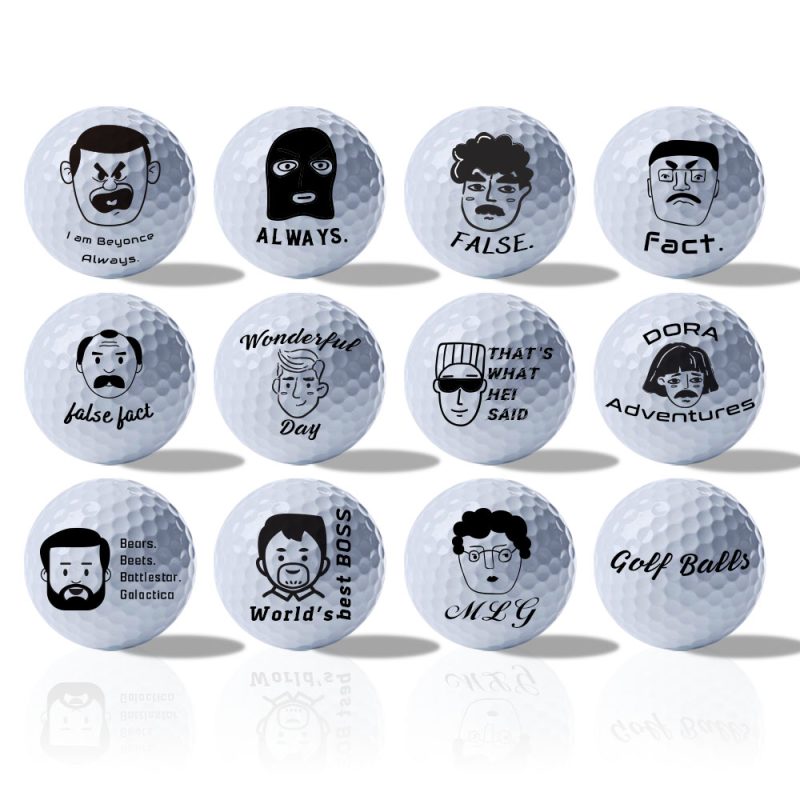
Golf balls can be customized not only in terms of performance but also in appearance. You can choose from a variety of colors and even have your name or initials printed on the ball for added personalization. This not only makes your balls easier to identify but also adds a touch of uniqueness to your game.

Test and evaluate

Once you’ve narrowed down your choices, it’s essential to test and evaluate the balls to ensure they meet your needs. Hit a few shots with each type of ball to get a feel for their performance and how they react to your swing. Pay attention to factors like distance, trajectory, spin rate, and feel.

Make your Selection

Finally, based on your testing and evaluation, make your selection. Choose the golf balls that best suit your game and personal preferences. Remember, customization is about finding the perfect balance between performance and personal taste, so don’t be afraid to experiment and find what works best for you.


Brief summary

We hope this guide has been useful in selecting a right golf ball.Remember that the type of golf ball you choose should match your skill level, swing speed, and playing conditions. Different balls will perform differently, so it’s important to find the one that best suits your needs.

Golf, a sport that combines precision, strategy, and a deep connection with the elements, is as much about choosing the right equipment as it is about honing your swing. Among all the gear, the golf ball stands out as a crucial factor that can significantly impact your game. Selecting the appropriate golf ball based on the playing scenario is an art that can elevate your performance on the course. In this blog, we’ll explore the ins and outs of making the perfect golf ball choice for various situations.

Course Conditions: The Foundation of Your Choice

Dry and Hard Terrains

When faced with a dry and hard course, the ball’s interaction with the ground becomes a primary consideration. A ball with a lower spin rate off the driver can be highly advantageous. This is because the hard surface of the fairway already provides ample opportunity for the ball to roll after landing. High – spin balls off the driver may cause the ball to balloon in the air, reducing the overall distance and introducing unpredictability in the trajectory.

Look for a ball with a construction that emphasizes distance and stability. A ball with a large, solid core is often a good fit. The solid core allows for efficient energy transfer at impact, generating more power and distance. Additionally, the ball’s cover material should be durable enough to withstand the abrasive nature of the dry, hard course. A harder cover can resist scuffs and cuts, ensuring that the ball maintains its performance characteristics throughout the round.

So the surlyn golf balls are vary suitable.

Wet and Soft Greens and Fairways

In contrast, wet and soft courses demand a different set of ball properties. Here, the ball doesn’t roll as far after landing due to the soft ground and the presence of moisture. To counter this, a ball with a high spin rate is essential. High – spin balls can bite into the soft greens, allowing for more precise approach shots.

A multi – layer ball with a soft urethane cover is an excellent option. The soft urethane cover creates more friction with the clubface, generating higher spin. This extra spin enables the ball to stop quickly on the wet greens, giving you better control over your shots. The multi – layer construction also helps in fine – tuning the ball’s performance, providing a balance between distance and spin.

So the urethane golf balls play well in wet and soft greens and fairways.

Wind Conditions: Adapting to the Elements

Calm Skies

On calm days, golfers can focus on a ball’s overall performance in terms of distance and control. A ball with a balanced flight profile is ideal. This means a ball that can offer good distance off the tee while maintaining excellent control in the short game.

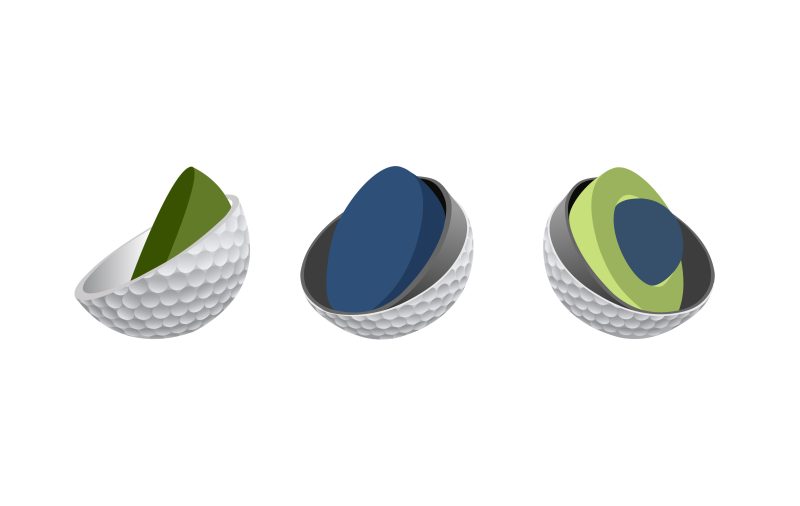
A three – piece ball often fits the bill. It typically has a soft inner core, a middle layer, and a cover. The soft inner core helps in generating distance by providing a spring – like effect at impact. The middle layer plays a crucial role in managing the ball’s spin and trajectory. It can be designed to optimize the ball’s performance for different clubs, ensuring that you get the right amount of spin and distance for each shot. The cover, usually made of a material like urethane, offers a soft feel and good spin control around the greens.

Blustery Conditions

When the wind is blowing, the ball’s flight stability becomes a top priority. A ball with a lower launch angle and less spin is more likely to cut through the wind effectively.

A ball with a high – density core and a streamlined design can be a great choice. The high – density core helps to keep the ball on a more stable flight path, reducing the impact of the wind on the ball’s trajectory. The streamlined design, often achieved through a carefully engineered dimple pattern, minimizes drag, allowing the ball to maintain its speed and direction in the wind. Additionally, a ball with a firmer cover can be more resistant to the buffeting effects of the wind, further enhancing its stability.

Skill Level and Playing Style: Tailoring the Ball to the Golfer

Novice and High – Handicap Players

For beginners and high – handicap players, the focus is often on distance and forgiveness. These players may not have the consistent swing mechanics of more experienced golfers, so a ball that can compensate for off – center hits is essential.

A two – piece distance ball is a popular choice. It usually has a large, soft core that helps generate distance even with slower swing speeds. The simplicity of the two – piece construction makes it more forgiving on mis – hits. The ball is designed to be more resilient, ensuring that it doesn’t lose its performance characteristics easily, which is beneficial for players who may not strike the ball perfectly every time.

Low – Handicap and Professional Golfers

Low – handicap and professional players, on the other hand, require a ball that offers maximum control and precision. They have the skills to take full advantage of the more advanced features of high – end golf balls.

A multi – layer tour – level ball is the go – to option. These balls are engineered with a high – degree of precision, often featuring multiple layers of different materials. The soft urethane cover provides exceptional spin control, allowing for delicate shot – making around the greens. The multi – layer construction also offers a consistent flight performance, enabling players to fine – tune their shots based on the specific requirements of each hole.

In conclusion, choosing the right golf ball for different scenarios is a nuanced process that requires careful consideration of course conditions, wind conditions, and your own skill level and playing style. By understanding the characteristics of different types of golf balls and how they perform in various situations, you can make an informed decision that will enhance your golfing experience and improve your scores on the course. So, the next time you tee off, take a moment to assess the situation and select the ball that’s right for you.

Selecting the most suitable golf ball is vital for optimizing your golfing performance and enjoyment. Here are the key aspects to take into account:

1.Skill Level

– Beginners: Newcomers to golf should prioritize forgiveness and ease of use. Balls with a large core and a soft cover are ideal as they’re more forgiving of off-center hits and can be launched more easily, offering a better chance of achieving distance even with an inconsistent swing.

– Intermediate Players: These players have a more consistent swing and are working on shot accuracy and control. A ball with a multi-layer construction, offering a blend of distance and control, is suitable. The mid-level compression allows for better energy transfer while still providing some forgiveness.

– Advanced Players: Highly skilled golfers with a fast and consistent swing need balls that offer exceptional spin and control. Tour-level balls with a firm core and a soft urethane cover are designed to meet their demands, enabling them to shape shots precisely and stop the ball quickly on the green.

2.Swing Speed

– Slow Swing Speed (<85 mph): For those with a slower swing, low-compression balls are the way to go. They compress more easily upon impact, allowing the club to transfer more energy to the ball, resulting in increased distance.

– Medium Swing Speed (85 – 105 mph): Golfers in this range should choose mid-compression balls. They provide a good balance between distance and control, responding well to the moderate force of the swing and offering a predictable flight.

– Fast Swing Speed (>105 mph): High-compression balls are designed for golfers with a fast swing. They can withstand the high impact forces, providing maximum energy transfer for long distance and excellent control.


3.Playing Style

– Power Hitters: If your focus is on hitting long drives and maximizing distance off the tee, look for balls with a low drag coefficient and a firm construction. These balls are designed to reduce air resistance and maintain a high velocity during flight.

– Control Players: Players who prioritize precision and control, especially around the green, should opt for balls with a soft cover that can generate high spin. This allows for more accurate approach shots and better control over the ball’s stopping distance.

– All-Rounders: Golfers who value a balance of distance and control in all aspects of their game should choose a ball that offers a versatile performance, with a moderate compression and a construction that provides a good combination of both qualities.

4.Course Conditions

– Soft Courses: On soft fairways and greens, a ball with more spin and a softer cover is preferred. The soft cover provides better traction on the clubface, generating more spin to stop the ball quickly on the green.

– Hard Courses: Hard and fast courses require a ball that can roll more after landing. A firmer ball with less spin is better suited for such conditions, as it can take advantage of the hard surface to gain extra distance.

– Windy Conditions: In windy conditions, a ball with a lower spin rate and a more stable flight is advantageous. Look for balls with a dimple pattern and design that can resist the effects of wind and maintain a straight trajectory.

5.Budget

– High-End Balls: Premium golf balls are equipped with the latest technology and offer the best performance in terms of distance, spin, and control. They are often used by professional golfers and serious amateurs who demand the highest level of performance.

– Mid-Range Balls: Mid-range balls provide a good balance of performance and cost. They offer a decent level of distance and control, making them a popular choice for recreational golfers who play regularly but don’t want to break the bank.

– Economy Balls: Budget-friendly golf balls are a good option for beginners or those who play infrequently. They may not have all the advanced features of more expensive balls, but they can still provide a satisfactory playing experience.

6.Personal Preference

– Feel: The feel of a golf ball is subjective but important. Some golfers prefer a soft feel at impact, while others like a firmer sensation. Test different balls to see which one feels the most comfortable and natural for you.

– Sound: The sound a ball makes when struck can also influence your choice. Some golfers prefer a solid, crisp sound, while others like a softer, more muted tone.

– Brand and Reputation: Some golfers have a preference for certain brands based on their reputation for quality and performance. Research different brands and read reviews to see which ones have a good track record.


In conclusion, choosing the right golf ball is a multi – faceted decision that involves considering your skill level, swing speed, playing style, course conditions, budget, and personal preferences. By carefully evaluating these factors and testing different balls, you can find the golf ball that best suits your needs and helps you perform at your best on the golf course.

Today we are going to talk about golf tees. Tees are very small things that are often ignored in the sport of golf. In fact, their role is crucial.

Whether you are a beginner or a golfer who has been around for a long time, it is important to recognize the importance of tees and know how to choose the right tees for your game. So, let’s explore together, understand the tees, and choose the tees that suit your different needs in different scenarios, so that golf has a better experience!

Understanding Golf Tees

Before we dive into tees, let’s explore what tees are and why they play a vital role in the game of golf.

The instrument used to set up the ball when opening each hole is the tee, and the area used for opening each hole is commonly known as the tee area or tee. The meaning has not changed since 1744, but prior to the late 19th century, a ball holder did not refer to a modern wooden or plastic ball inserted into the ground, but to a small amount of dirt or sand deposited on the ground and used to hold the ball up for play. Today’s tees are mostly bamboo, wooden or plastic nails that can be inserted into the ground.

The Role of Tees in Golf Performance

Why are tees important and indispensable?

In the early days, caddies used to take sand from the hole and use it as a carrier for their next tee shot. This was easy to damage the hole, and the club later decided to ban sand from the hole, but instead prepared a wooden box on the tee with wet sand for the caddie or golfer to take out, pile into a cone, and hold the golf ball to be hit.

Later, the tee was invented, which is a support connecting the grass and the ball, and its main role is to support and cushion the golf ball to maintain the balance of the golf ball on the grass and prevent the ball from rolling. When playing, the tees help to position the ball so that the player can better align the ball and make a swing. In addition, the tees can also protect the grass of the court, because the tees can be inserted into the grass on the tee court, reducing the contact between the ball and the ground, thus reducing the damage to the turf. And some players can judge whether the club face is square by the tees and the direction rod.

Different styles of golf tee function with suitable crowd

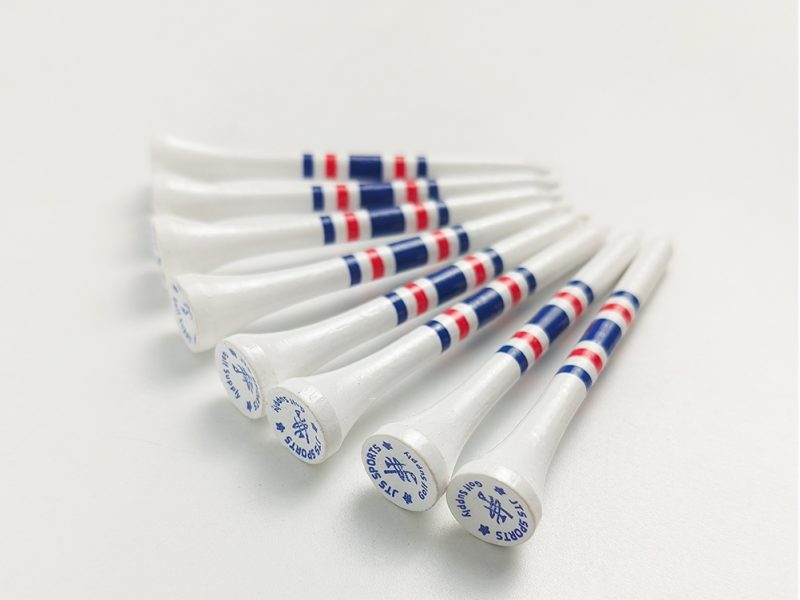
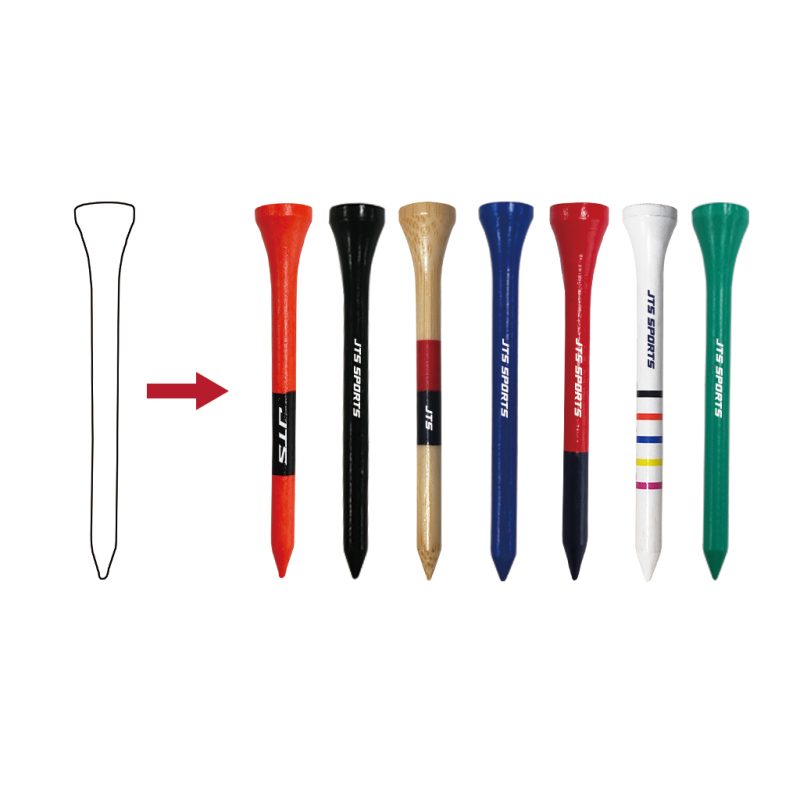
Common types of golf tees are these: Bamboo wood tee,Golf Prong Tee,Golf Magnet Tee,Golf Castle Tee,Golf Rubber Tee.

You now know the types and functions of golf tees. So do you know how to choose a golf tee that is right for you?

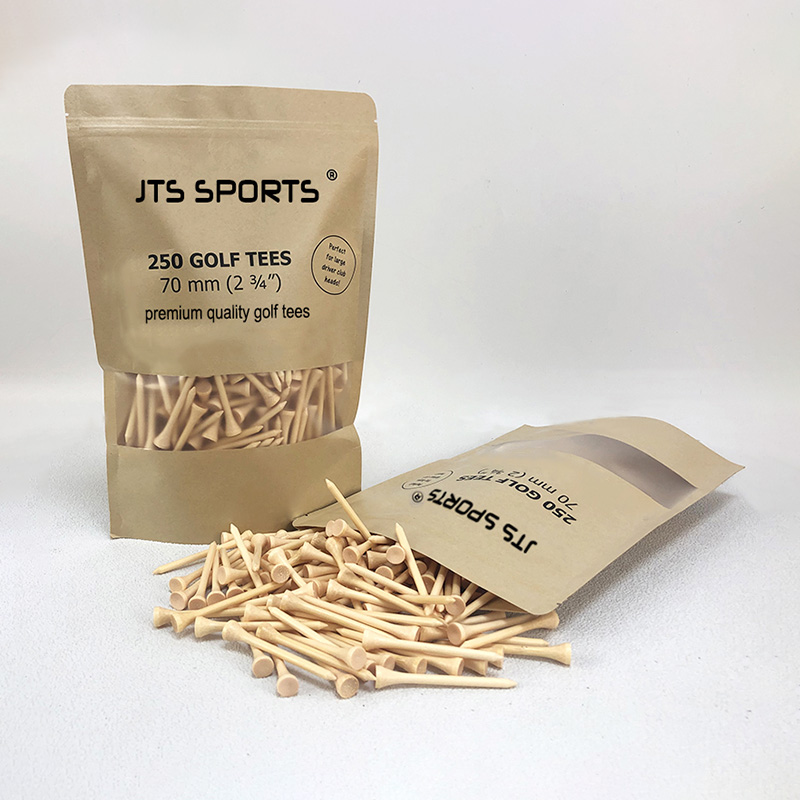
1.Bamboo wood tee : Made of bamboo or wood material, the audience is wide, suitable for most players. If you are new to golf, the golf tee is a universal choice for you.

2.Golf Prong Tee:Golf Prong Tee: Also known as a three-prong tee or triangular tee, is a unique golf tee design. It not only gives a novel feeling in design, but also has a great difference in function from the traditional wooden golf tee.

The advantage is that its sharp foot reduces the area of support for the ball, and when you swing to hit the ball, it greatly reduces the friction generated by the ball when taking off, which is conducive to the stability of the ball after hitting.

The disadvantage is that most of them are made of plastic material, and the environmental protection is not as good as wooden tees.

The Golf Prong Tee is more suitable for bunker players, and its accuracy to the ball is more advantageous than the traditional tee, adapting to the difficult terrain.

3.Golf Magnet Tee: it can be recycled. Compared to plastic and wooden materials, the golf tee is of better quality, can be better inserted into hard grass, and is relatively friendly for personalized design and addition of elements.

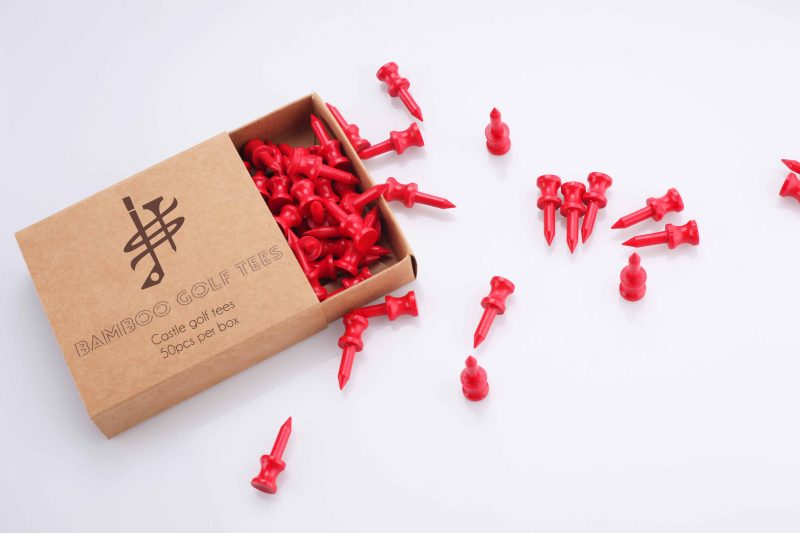
4.Golf Castle Tee: As the name suggests, it is shaped like a castle, hence the name. Suitable for golfers seeking a unique design of the golf tee.

5.Golf Rubber Tee:The material is soft and has a good grip.The most different point from other golf tee is that it does not need to be inserted into the grass, only need to lay the base flat on the ground to support the ball. This applies to scenarios where a grass mat is used as a golf training aid. But here’s the downside to the rubber golf tee,it is not suitable for complex terrain scenarios, such as bunkers, or grassy areas where the ground is not very flat, so it is not possible to hold the ball stably.

Conclusion

This you should have a more general understanding of the golf tee, in fact, choosing a suitable golf tee is not a difficult thing, each golf tee has its own characteristics and functions, according to their own needs to choose, you can find the right one. If you really don’t know which one is best for you, don’t hesitate to try different kinds of golf tee, practice will test the answer you want. Hopefully, your golf tee will be your proud tee partner the next time you tee off.

Welcome, golf enthusiasts! If you’ve ever gazed at your golf bag, pondering the intricate dance of club names, types, and uses, then buckle up because we’re diving into the fascinating world of golf clubs, starting from the powerful driver to the precision putter.

 1. The King of the Tee: The Golf Driver

When you think of the ultimate long-range weapon on the golf course, your mind immediately goes to the driver. More formally known as the 1 Wood, this club reigns supreme in terms of distance and speed. The term “drive” often takes the spotlight when referring to hitting with a driver. Did you know that if you’re playing without a tee, like on the fairway, you can impress your friends by mentioning “Driver Off the Deck” (DOD)?

Drivers are all about power, and they are designed specifically for launching the ball high and far. However, as you navigate the fairway on a long par 4 or par 5, using a driver may not always be feasible, which is where its cousins come into play.

2. Fairway Woods

Enter the fairway woods—club relatives to the mighty driver. Picture this: you’re on a long hole and need a reliable companion to get you to the green. Fairway woods, typically numbered 3, 5, and 7, excel in these situations. They got their name because they’re specifically engineered for play on the fairway. Designed to be more aerodynamic and forgiving than a driver, these clubs help you find the sweet spot while navigating the challenges of the course.

3. The Rise of Irons

As we transition into the realm of irons, get ready to tackle the shorts with precision. Traditional iron numbers (1, 2, 3) have become relics of the past, but that doesn’t make them any less legendary! Today’s golfers often live by the mantra of choosing hybrids or the more versatile 4-iron, which gives a nod to those old-school vibes while still serving modern performance.

Irons are divided primarily into two categories: blade and cavity back. The blade style is sleek and elegant, but don’t be fooled—it’s notoriously challenging to play. On the other hand, cavity backs offer a more forgiving experience, perfect for those still perfecting their swing.

4. Hybrid Clubs: The Best of Both Worlds

The hybrids—those quirky and beloved clubs often referred to in English as “iron woods” or in our hearts as “little chicken legs”—bridge the gap between woods and irons. These clubs borrow the best features from both worlds, blending a forgiving design with the necessary control for precise shots. So, if you’re looking for a reliable club that feels like it’s got your back, grab a hybrid!

5. Driving Irons: The Utility of Precision

Next up are the driving irons, also known as utility irons. They’re designed for that golfer who craves a balance between distance and playability. With a larger club face than traditional irons, these beauties give golfers ample room for error, making them an excellent choice for a variety of lies on the course.

6. Wedges: The Short Game Heroes

Now, let’s dig into the wedges, the unsung heroes of the short game. The **Pitching Wedge (P Wedge)** comes first, designed to help you approach the green with finesse. Following closely behind are the **Gap Wedge** and **Sand Wedge**—the trusty sidekicks that take the confusion out of yardages between clubs. And let’s not forget about the powerful **Lob Wedge**—the club that gets you out of those sticky situations with a high-lofted shot.

7. The Putter: Your Trusty Partner on the Green

Last but certainly not least, we arrive at the putter. This club deserves a special mention, as it’s responsible for the crucial final strokes that lead to victory (or a friendly round). Putters are divided into two major categories: the “blade,” which boasts a long, narrow head, and “mallet” putters, which come in various funky designs. Whether you’re channeling your inner Tiger Woods with a traditional blade or going for a modern mallet, the putter is your ultimate companion on the green.

Conclusion: Know Your Clubs

Now that you’re armed with the knowledge of golf clubs, from golf drivers to putters, it’s time to hit the course! Each club serves its own unique purpose, and understanding their strengths will arm you with the confidence to tackle that tee box or green. So next time you’re out playing, you’ll not just swing with gusto but also an insightful understanding of each trusty tool at your disposal. Happy golfing, and may your drives be long and your putts be true!

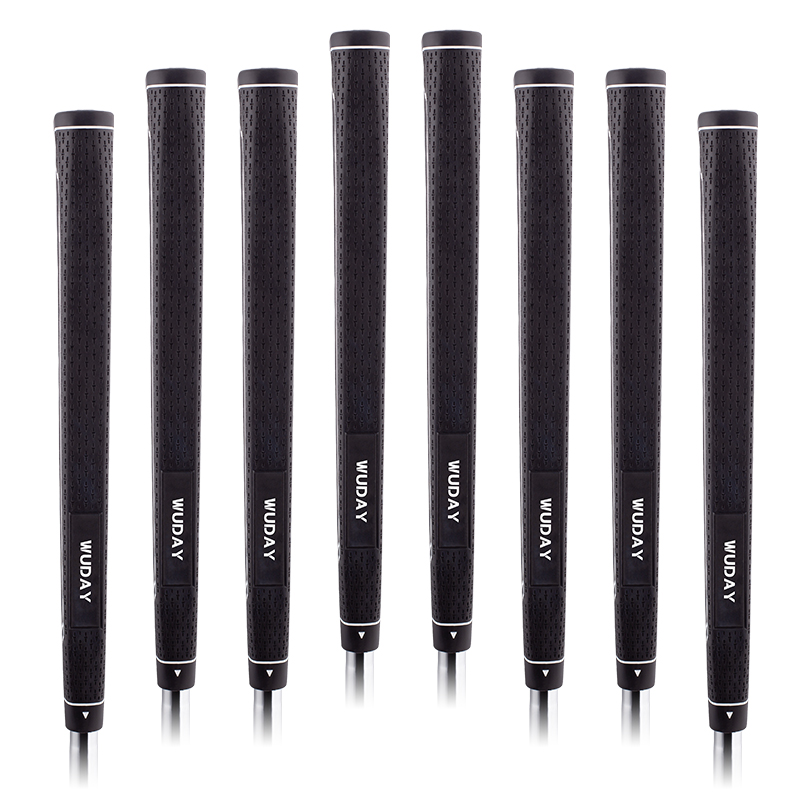
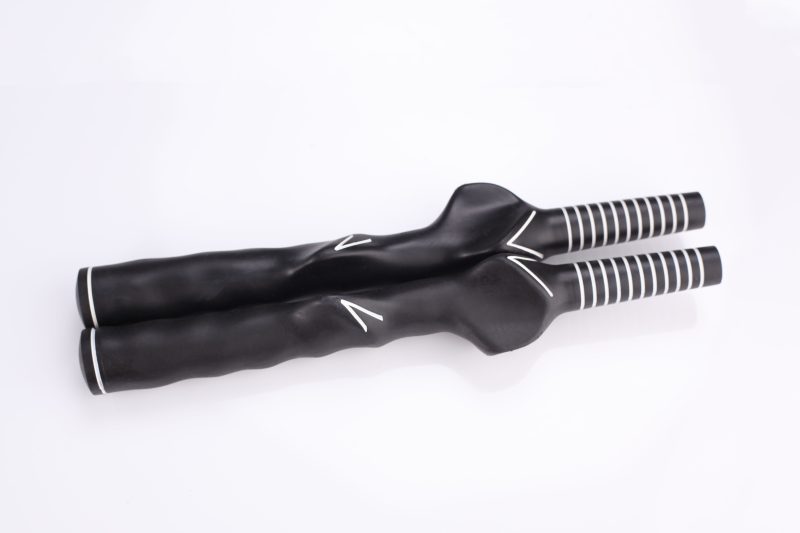
Today, we’re talking about an often-overlooked aspect of golf clubs that can significantly impact your performance: the grips. While they may seem like a small part of your club, the truth is that golf club grips play a pivotal role in how you connect with your club and, ultimately, how you connect with the ball.

Whether you’re an experienced golfer or a beginner, realizing the significance of grips and knowing how to select the perfect one for your game can make a big difference. So, let’s dive in and explore how you can get a grip on your game!

Understanding Golf Club Grips

Before we dive into the types and characteristics of golf club grips, let’s first understand what they are and why they’re so crucial for your golf game.

What are Golf Club Grips?

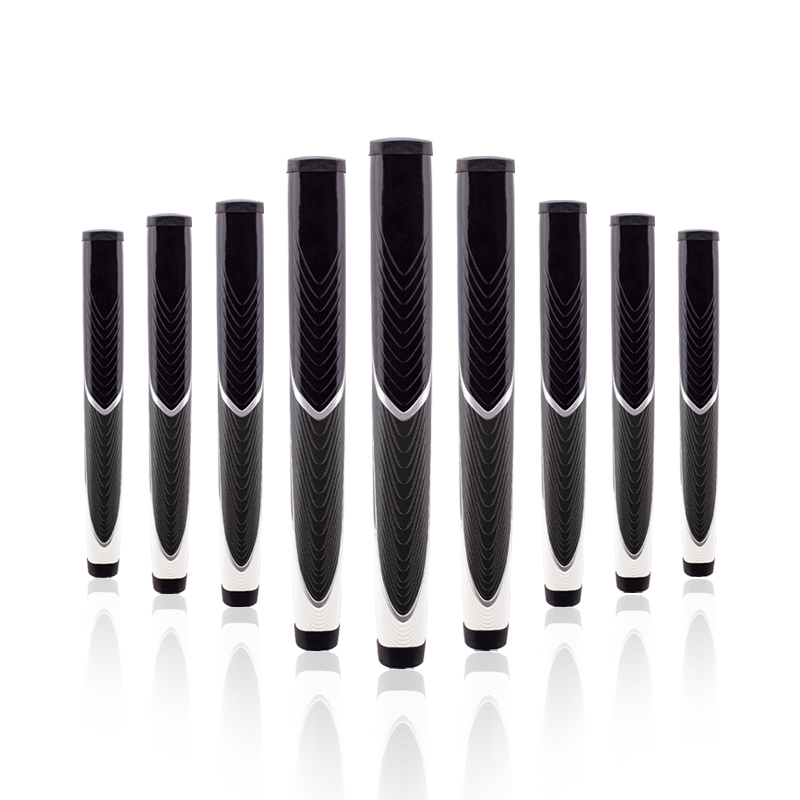
Golf club grips are the club part where your hands make contact. They are typically made from materials like rubber, synthetic compounds, or a combination of both. The grip is more than just a handle; it’s your direct link to the club and, by extension, to the ball. It’s where all your swing’s power and control are translated from your body to the club.

The Role of Grips in Golf Performance

Why are grips so important? It all boils down to control and comfort. A good grip can:

  • Improve your swing:A grip that fits well in your hand allows for a better swing path and more consistent contact with the ball.
  • Enhance feel: The right texture and firmness can improve your feel for the club, giving you more confidence with each shot.
  • Reduce hand fatigue:Grips that absorb shock and comfort can reduce hand fatigue, especially during longer rounds.
  • Weather resistance: Grips also play a crucial role in different weather conditions. Whether it’s hot, cold, or wet, the right grip ens

Types of Golf Club Grips

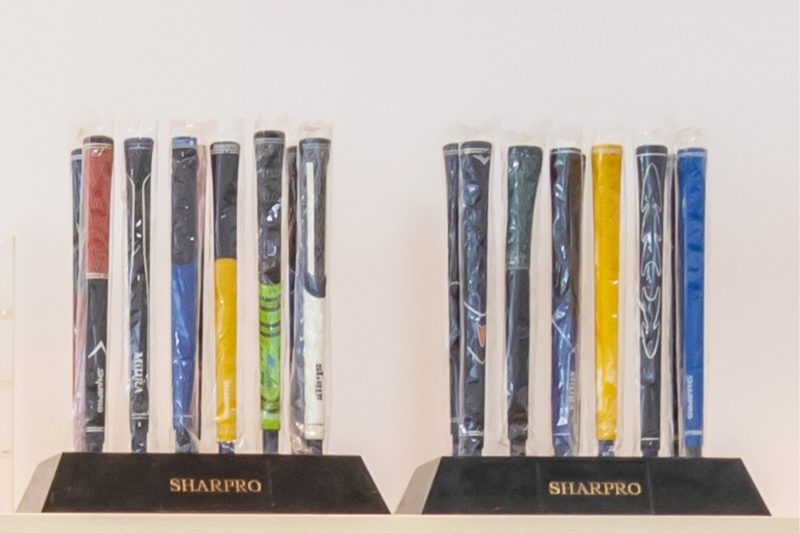
Golf isn’t just about skill; it’s like a symphony of decisions, from your choice of clubs to the grips you use to hold them. The type of grip you choose can profoundly impact your game. Let’s unravel the different kinds of grips and their unique characteristics.

Rubber Grips: The All-Rounders

Rubber grips are the go-to choice for many golfers. They are durable, affordable, and offer a great combination of tackiness and firmness. Ideal for players looking for a straightforward, reliable grip.

Corded Grips: For the Weathered Golfer

Next up are corded grips. These grips are intertwined with a cord material, offering exceptional traction, especially in wet conditions. If you’re someone who doesn’t let the rain dampen your golfing spirit, corded grips might be your best bet.

Wrap Grips: A Nod to Tradition

For those who appreciate a classic feel, wrap grips mimic the look and feel of leather wrapped around the grip. They offer a softer feel and are often preferred by players who like a more traditional look and feel in their grips.

Synthetic Grips: Embracing Technology

Synthetic grips, often made with advanced materials, provide a wide range of textures and firmness. They are great for golfers looking for something combining innovative technology with performance.

Factors to Consider When Choosing Grips

Choosing the right grip is like finding the perfect pair of shoes; it must fit well and feel comfortable. Here are some key factors to keep in mind:

Hand Size and Grip Size: It’s All in the Fit

The first step is to ensure the grip size matches your hand size. A grip that’s too large can hinder your wrist action, while one that’s too small can lead to excessive hand movement. Both scenarios can affect the accuracy of your shot.

Weather Conditions: Grip Your Game in Any Weather

Consider the typical weather conditions you play in. If you often play in wet or humid conditions, look for grips with higher traction, like corded grips. For dryer climates, a standard rubber grip might suffice.

Personal Preference: Feel is Key

Do you prefer a softer or firmer grip? The texture and firmness are largely about personal preference and comfort. Don’t hesitate to experiment with different types to find what feels right for you.

Durability and Maintenance: Long-Term Companions

Some grips wear out faster than others. Consider how often you play and how much time you’re willing to invest in grip maintenance. Regularly cleaning and storing your grips correctly can make them last longer.

How to Install and Maintain Your Grips?

Now, let’s talk about keeping those grips in top condition and how to install them when it’s time for a change.

Installation: DIY or Professional Help?

Installing new grips can be a fun DIY project, or you might prefer the assurance of professional installation. If you’re doing it yourself, you’ll need grip tape, solvent, and a vice to hold the club steady. Follow step-by-step tutorials or seek advice from a pro shop.

Maintenance Tips: Extend the Life of Your Grips

Regular cleaning is crucial. To clean your grips, use gentle soap and water to remove dirt and oils. After cleaning, be sure to dry them thoroughly and prevent prolonged exposure to direct sunlight. Wipe them dry and avoid leaving them in direct sunlight for extended periods. Remember, well-maintained grips can be a game-changer.

Top Picks from TaylorMadeGolf

At TaylorMadeGolf, we understand that the right grip can transform your game. Let’s look at some of their top-rated golf club grips that have impressed golfers worldwide.

The All-Weather Champion

This grip is designed to perform in all weather conditions. With a textured surface for added grip and durability, it’s a versatile choice for golfers who play in various climates. Its medium firmness strikes the right balance between control and comfort.

Precision and Feel

Model 2 offers a unique blend of texture and firmness for golfers who crave precision and exceptional feel. It’s an excellent choice for those who want to fine-tune their shots and maximize their performance.

Comfort Meets Control

If comfort is a priority, the Model 3 offers a soft, cushioned feel while maintaining control. It’s perfect for players who want to reduce hand fatigue during long rounds without compromising performance.

Conclusion

Choosing the right golf club grip is like finding the perfect partner for your golfing journey. Choosing the right grip is a decision that can have a big effect on how well you play and how much you enjoy the game. Remember that no single grip suits everyone, so take the time to explore your options and consider your unique preferences and playing conditions.

As you experiment with different grips and fine-tune your choices, you’ll find that your game improves, shot by shot. Embrace the process and trust that the right grip will help unlock your golfing potential.

Are you prepared to dive into the realm of golf club grips and elevate your game to the next level? Explore TaylorMadeGolf’s website to discover their wide range of grips, each designed to cater to the diverse needs of golfers like you.

Today, we’re diving into a topic that might sound technical but is crucial for every golfer: golf ball compression ratings. Have you ever wondered why some balls feel softer when you hit them while others seem to spring off the clubface? It’s all about compression, and understanding it can be a game-changer for your performance on the course.

Golf requires precision and skill, and the gear you use can greatly affect how well you play. Like selecting the right clubs, choosing the right golf ball is vital.

But with so many options on the market, how do you decide? That’s where golf ball compression ratings come into play.

Whether you play golf occasionally for fun or aspire to become a professional, understanding and mastering this aspect of your equipment can help you reach your full potential and make the game more enjoyable. So, let’s dive into the golf ball compression world and discover how this little number can make a big difference in your game.

What is Golf Ball Compression?

Simply put, golf ball compression refers to how much a golf ball deforms or compresses upon impact with the club. It measures the ball’s firmness and is expressed as a number – typically ranging from low (below 70) to high (above 100). But what does this number mean for you and your game?

Imagine golf ball compression like a spring. A high-compression ball (100 and above) is like a stiff spring; it requires more compression force and is generally preferred by players with faster swing speeds. These balls tend to give less of a ‘squishy’ feel and more of a ‘solid’ feel. Conversely, low compression balls (below 70) are like softer springs. They compress more easily, making them ideal for players with slower swing speeds, providing a softer feel and helping to maximize distance.

Between these two extremes are medium compression balls, designed to suit a broad range of players who have moderate swing speeds. These balls balance distance and control, offering a versatile option for many golfers.

Understanding golf ball compression is crucial because it directly affects your shots’ distance, trajectory, and feel. Selecting a ball with the right compression rating for your swing can make a noticeable difference in your game. It’s not just about how hard or soft the ball feels but how well it matches your playing style and swing mechanics.

The Science Behind Compression

Let’s get a bit scientific, but don’t worry, I’ll keep it light and easy to understand. The magic of golf ball compression lies in its impact on ball flight and performance. When you strike a golf ball, the force of your swing makes the ball compress and then rebound. This rebound is what sends the ball soaring through the air.

The materials used in making golf balls play a significant role here. Modern golf balls typically have a core made from synthetic rubber, which is key to determining the ball’s compression.

The firmer the core, the higher the compression rating. Higher compression balls tend to produce less spin and more distance, making them a favorite among players with powerful swings. Conversely, lower compression balls have more spin and provide better control, which can be a boon for players with slower swings.

So, in a nutshell, the right compression works with your swing to optimize the ball’s performance, affecting how far and how straight it travels.

Choosing the Right Compression for Your Game

Choosing the right compression isn’t a one-size-fits-all scenario. It’s more like finding the perfect pair of shoes to fit your style and comfort. Generally, a higher compression ball can maximize your distance if your swing speed is fast (think pro-level speeds). For those with a slower swing (which is most recreational players), a lower compression ball can help you get more distance.

Here’s a pro tip: Don’t shy away from experimenting. Many golfers, especially beginners and intermediates, overlook the importance of ball selection. But just like you would try different clubs to see what works best, doing the same with golf balls can significantly improve your game. Visit a local pro shop; they might just have a variety of balls you can test out.

Remember, the goal is to find a ball that feels good when you hit it and performs well with your typical swing.

The Role of Weather and Conditions

Golf isn’t played in a lab – it’s played in the real world, where weather and playing conditions vary. Believe it or not, these factors can influence your golf ball’s behavior. For instance, a golf ball tends to compress less in colder weather, affecting its distance and feel. This is why some golfers prefer a lower compression ball in colder climates – it helps offset the reduced compression caused by the temperature.

Similarly, playing at higher altitudes or humid conditions can affect ball flight and performance. The key is to be aware of these factors and adjust your equipment and play style accordingly. Sometimes, the difference between a good round and a great one is just a matter of understanding and adapting to the environment you’re playing in.

Popular Golf Ball Brands and Their Compression Ratings

When exploring golf ball compression, looking at what’s on the market is helpful. Major brands like TaylorMade, Titleist, and Callaway, among others, offer a variety of golf balls with different compression ratings. For instance, TaylorMade’s Tour balls are typically high compression, designed for golfers with faster swings. On the other hand, their Soft Response line caters to those seeking lower compression for a softer feel and more flexibility.

Exploring different brands can give you a sense of the range of options available. Every brand has its own special technology and design principles that affect the compression and overall performance of their golf balls. It’s not just about the brand name; it’s about finding a ball that aligns with your swing and game style.

Myths and Misconceptions

There are plenty of myths surrounding golf ball compression. One common misconception is that high-compression balls are categorically ‘better’ or ‘go farther’ than low-compression balls. This isn’t necessarily true. The ‘best’ ball depends more on how the ball’s compression aligns with your swing speed and style.

Another myth is that you need to be a professional or a highly skilled amateur to benefit from understanding and choosing golf ball compression. This couldn’t be further from the truth. Golfers at all skill levels can see noticeable improvements in their game by selecting the right compression rating for their balls.

Understanding these misconceptions helps make more informed choices about the golf balls you use, leading to a better and more enjoyable golfing experience.

How to Test and Find Your Ideal Ball

Finding your ideal golf ball might sound daunting, but it’s pretty straightforward. Start by testing different compression ratings. Many golf shops offer trial packs or can recommend a variety of balls to try. Pay attention to how each ball feels when you hit it and observe its performance – does it travel the distance you expect? Does it feel good coming off the clubface?

Also, consider getting a professional fitting. Just like clubs, golf balls can be fitted to your game. A professional can analyze your swing speed and style, offering tailored recommendations. This can be particularly useful if you’re serious about improving your game or struggling to decide between a few options.

Experimentation and professional advice are key. Finding your perfect match might take a few rounds, but once you do, it can make a significant difference in your game.

Impact of Golf Ball Compression on Your Overall Game

The choice of golf ball compression has a more significant impact on your game than you might think. For starters, the right compression can enhance your driving distance. If you’re using a ball that’s too high in compression for your swing speed, you won’t be able to compress it fully, resulting in shorter drives. Conversely, a ball that’s too low in compression for your swing might not offer the optimal energy transfer, leading to a loss of distance.

Beyond distance, compression affects your feel and control over the ball, especially in your short game. Lower compression balls typically offer better control, making them ideal for shots around the green. This can be a game-changer for golfers who value precision over distance.

Ultimately, the best way to understand the impact is through personal experience. Pay attention to how different balls affect your game in various areas – driving, approach shots, putting – and you’ll start to see patterns that will guide your choice.

Conclusion

We’ve covered a lot of ground in our exploration of golf ball compression, from understanding what compression is to how it affects your game and even debunking some common myths. Remember, the key takeaway is that there’s no one-size-fits-all answer. The best golf ball depends on your unique swing and playing style.

Golf is as much about the small details as the big swings. Paying attention to aspects like ball compression can lead to noticeable improvements in your game. Whether you’re a weekend player or on the path to becoming a seasoned pro, taking the time to understand and select the right golf ball is worth the effort.

Are you in the market for a new golf tour bag? If so, then your search is over. A great golf bag blends functionality, style, and comfort, elevating every aspect of your game.

Knowing what makes a bag stand out is key whether you’re a seasoned pro or a casual player. In this blog, we dive into the world of professional golf tour bags, uncovering the features that make a difference.

From innovative storage solutions to ergonomic designs, get ready to discover how the right bag can transform your golfing experience. Let’s act and find the perfect partner for your golfing adventures!
Feature 1: Durability and Material Quality

Regarding professional golf tour bags, the first feature to consider is undoubtedly durability. Your golf bag is your trusty companion on the course, facing elements like sun, rain, and the occasional sand trap. Therefore, choosing a bag made from high-quality, robust materials is non-negotiable.
But what materials cut? Top-tier golf bags are typically crafted from premium leather or advanced synthetic fabrics. These materials aren’t just about looks; they’re chosen for their ability to withstand wear and tear. Leather, known for its timeless appeal, offers a classic look and exceptional durability. On the other hand, synthetic materials, such as nylon or polyester, provide a lightweight yet sturdy alternative, often featuring additional water-resistant properties.
It’s not just the material itself but how it’s put together that matters. Look for bags with reinforced stitching, sturdy zippers, and padded areas where your clubs will rest. This attention to detail ensures that your bag can handle the rigors of the course and protect your valuable clubs in style.

In your search for that perfect golf tour bag, remember: it’s an investment in your game. A well-crafted, durable bag won’t just last for seasons; it’ll be a constant in your evolving golf journey.

Feature 2: Ample Storage and Organization

An indispensable aspect of a high-quality professional golf tour bag is its storage capacity and organizational design. The ideal bag should cater to all your equipment needs seamlessly. It needs specialized pockets for various golfing essentials – from the larger compartments for apparel and spare shoes to smaller, more secure pockets for valuables and electronic devices.

Look for features like insulated pockets for beverages, a waterproof compartment for your phone, and a specific slot for your umbrella. The organization of these compartments should be intuitive, allowing for easy access to your items while on the move. This thoughtful design is crucial in a bag that carries your gear and helps keep your focus on the game.

Feature 3: Comfort and Portability

The ease of carrying your bag can significantly impact your game. While spacious and durable, golf tour bags must also be ergonomically designed for comfort. A bag with adjustable, padded shoulder straps reduces strain during long rounds.

Some bags offer a dual strap system, providing the convenience of a backpack-style carry. Equally important is a sturdy, retractable stand. This feature prevents the bag from tipping over on uneven terrain and ensures that your clubs are easily accessible.

When selecting your next golf tour bag, consider these aspects of comfort and portability, as they are vital for maintaining endurance and focus throughout your game.

Feature 4: Customization and Personalization

A golf bag can be more than just a piece of equipment; it can be a personal style statement. In the world of professional golf tour bags, customization options abound. From selecting a color scheme that aligns with your personal or team colors to adding custom embroidery such as your name, initials, or a logo, these options allow for personalization that reflects your individuality on the course.

Some manufacturers offer engraving services for nameplates or specialized tags, adding a touch of sophistication. This personalization doesn’t just make your bag unique; it fosters a deeper connection between the golfer and their gear, potentially boosting confidence and comfort on the course.

Feature 5: Weather Resistance and Maintenance

The final key feature to consider in a professional golf tour bag is its ability to withstand various weather conditions. Golf is an outdoor sport, and your bag is bound to face sun, wind, and rain.

A top-quality golf bag should come with weather-resistant properties. Materials like waterproof fabrics or water-resistant coatings are essential to protect your clubs and accessories from moisture. Some bags even feature sealed zippers and rain hoods for added protection.

However, durability in the face of the elements isn’t just about the materials; it’s also about how you maintain your bag. Regular cleaning, storing it properly, and occasionally treating the material (especially if it’s leather) can significantly extend the life of your bag. A well-maintained golf bag looks better and provides reliable performance over time.

Feature 6: Security Features

Security is often overlooked when selecting a professional golf tour bag. In today’s world, where we carry not just golf equipment but also personal items like smartphones, wallets, and keys, ensuring these items’ safety becomes paramount.

High-end golf bags often come equipped with lockable zippers and RFID-blocking pockets to safeguard valuables. Some bags also feature sturdy, lockable clasps for added security, especially useful when traveling.

When choosing your next golf tour bag, consider these security features a priority, ensuring peace of mind on and off the course.

Feature 7: Eco-Friendly Materials

In a time when it’s crucial to be environmentally aware, choosing a golf tour bag made from eco-friendly materials is a responsible decision. Many manufacturers are embracing sustainable practices, using recycled materials, and ensuring their production processes have a minimal environmental footprint.

These eco-friendly bags often do not compromise on quality or durability. By choosing a bag made from sustainable materials, you are investing in a high-quality product and contributing positively to environmental conservation. This feature particularly appeals to the environmentally conscious golfer who wants to make a statement about their commitment to sustainability.

Conclusion

Choosing the right golf tour bag is more than an exercise in style – it’s about finding a blend of durability, functionality, comfort, and personal expression.

From the robustness of the materials to the convenience of well-thought-out storage compartments, from the comfort of ergonomic design to the joy of personal customization, and finally, to the assurance of weather resistance – these features collectively define a superior golf tour bag.

As you consider your next purchase, keep these pro secrets in mind. The right bag won’t just carry your clubs; it will enhance your overall golfing experience round after round.