
In the golf industry, product quality is often associated with premium materials or sophisticated manufacturing equipment. However, experienced manufacturers understand that quality is not created during final inspection—it is built into every stage of the production process.Whether producing golf tees, headcovers, ball markers, divot tools, or travel accessories, consistency is one of the most important factors influencing customer satisfaction. A product that performs well once is valuable, but a product that performs consistently across thousands of units is what defines manufacturing excellence.As global buyers become increasingly focused on reliability and long-term supplier relationships, quality control has evolved from a simple inspection procedure into a comprehensive production philosophy.This article explores how modern quality control systems shape golf accessory manufacturing from concept development to final shipment.

Product Design: The First Stage of Quality Control
Many quality issues originate long before production begins. Design decisions directly influence manufacturability, durability, and long-term performance.During product development, engineers evaluate factors such as: Material compatibility、Structural strength 、Assembly requirements 、User interaction Environmental exposure.For example, a golf headcover may appear visually appealing in a digital rendering, but if stitching stress points are not properly considered, premature seam failure may occur during use.
As a result, modern manufacturers increasingly integrate quality planning into the design phase rather than waiting until production begins.
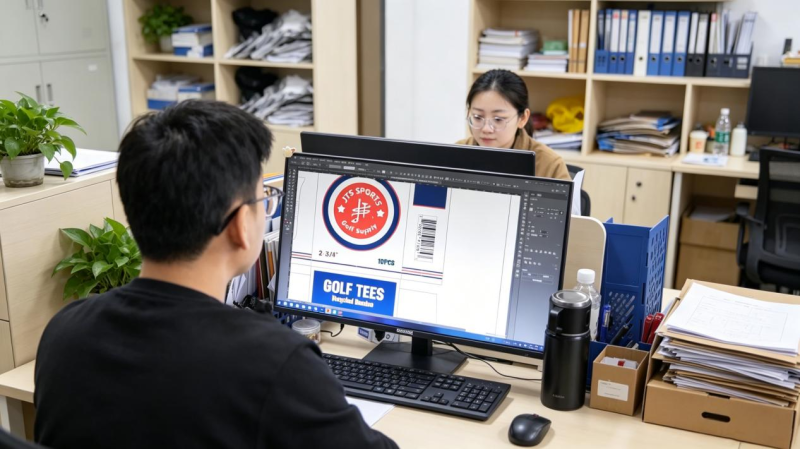
Material Verification Before Production
Raw materials form the foundation of product performance.Before manufacturing starts, suppliers often verify incoming materials through multiple inspection procedures. These checks ensure consistency in dimensions, hardness, density, color, and durability.For golf product, common material evaluations include:Fabric abrasion resistance、Foam density testing、Plastic impact resistance、Surface finish consistency、Moisture resistance. Material verification helps prevent production issues before they reach the factory floor.Without proper material control, even the most advanced manufacturing process cannot guarantee consistent results.

Prototype Evaluation and Product Validation
Before mass production begins, prototypes are used to validate product performance.Prototype testing allows manufacturers to identify potential weaknesses and improve designs before large-scale investment occurs.Typical evaluation procedures include:Fit testing、Functional testing、Impact simulation、Durability assessment、User feedback collection. For example, a golf travel cover may undergo repeated loading and unloading simulations to determine whether reinforcement areas require modification.This stage significantly reduces future production risks.
Process Control During Manufacturing
Quality control becomes even more important once production starts.Rather than relying solely on final inspection, modern factories monitor key manufacturing variables throughout production.These variables often include:Machine settings、Temperature control、Injection pressure、Cutting accuracy、Stitching consistency.By monitoring production parameters in real time, manufacturers can detect deviations before large quantities of defective products are produced.This proactive approach improves efficiency while reducing waste.
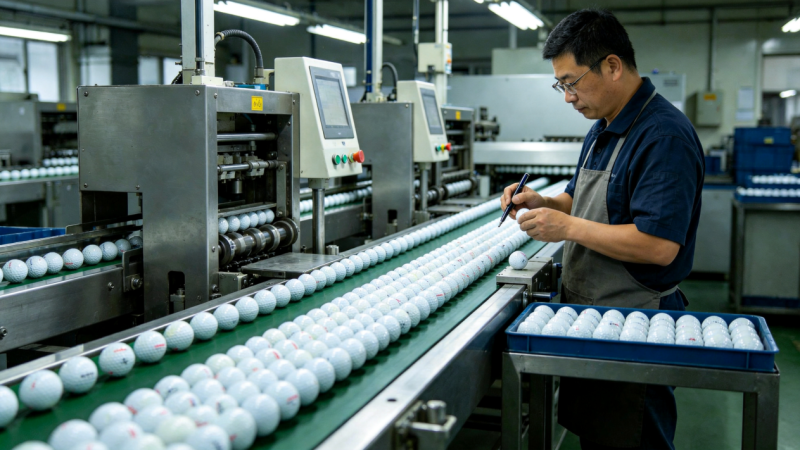
Dimensional Accuracy and Consistency Checks
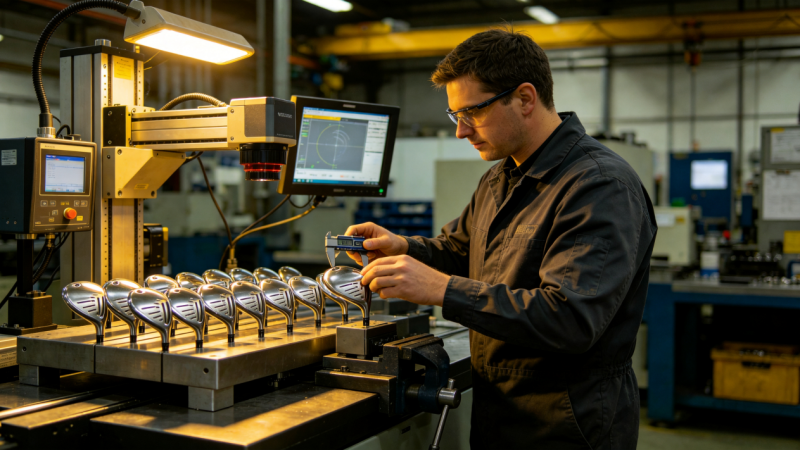
Golf accessories often require tight dimensional tolerances. Examples include:Tee height consistency、Headcover fit accuracy、Ball marker dimensions、Travel cover compartment sizing. To maintain consistency, factories use measuring tools such as:Digital calipers、Laser measurement systems、Automated vision inspection equipment.These systems help ensure that products remain within predefined specifications throughout production.Consistency is especially important for customers ordering repeat production runs over multiple years.
Durability Testing Under Real-World Conditions
A product may pass visual inspection yet fail during actual use.For this reason, durability testing has become a critical component of modern quality assurance.Depending on the product category, testing may include:Abrasion resistance、Repeated flex testing、Compression testing、UV exposure testing、Moisture resistance testing、Impact resistance evaluation.These tests simulate real-world conditions and provide valuable data regarding long-term performance.Manufacturers serving international markets increasingly use durability testing to validate product reliability before shipment.
Final Inspection Before Shipment
Once production is completed, final inspections verify that products meet customer requirements.Inspection procedures typically include:Appearnce evaluation、Dimenson verification、Functional testing、Packaging inspection、Quantity confirmation.Sampling methods are commonly used to assess production quality efficiently while maintaining statistical reliability.A well-executed final inspection serves as the last safeguard before products enter the supply chain.
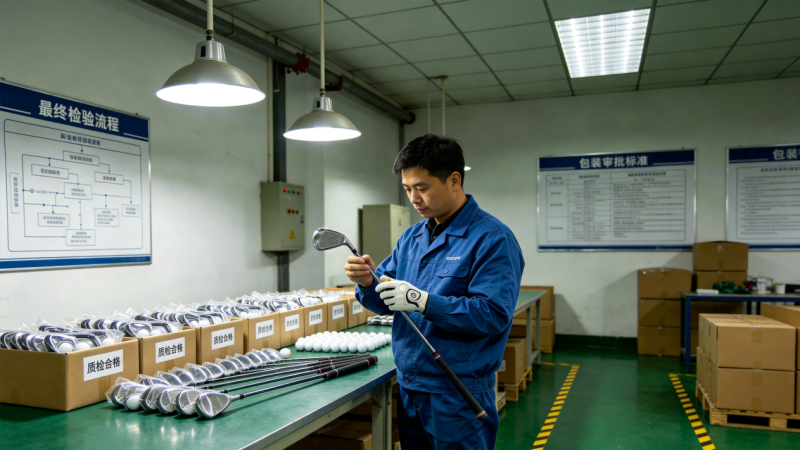
Continuous Improvement Through Quality Data
One of the most significant developments in modern manufacturing is the use of quality data for continuous improvement.Factories increasingly collect production information related to:Defect rates、Material performance、Customer feedback、Warranty claims、Production efficiency By analyzing these data points, manufacturers can identify recurring issues and implement corrective actions.Over time, this process leads to improved consistency, reduced waste, and higher customer satisfaction.
Industry Trend: From Inspection to Prevention
The golf accessory industry is gradually moving away from reactive inspection models toward preventive quality systems.Instead of asking:”How do we find defects?”Manufacturers increasingly ask:”How do we prevent defects from occurring in the first place?”This shift reflects broader trends across global manufacturing and is particularly important in industries where consistency directly influences customer trust.Companies that successfully implement preventive quality systems often achieve stronger long-term relationships with distributors, retailers, and end users.
Conclusion: Quality as a Competitive Advantage
In today’s golf accessory market, quality control is no longer simply a factory responsibility—it is a strategic advantage.From product design and material verification to process control and durability testing, every stage contributes to the final customer experience.As competition increases and buyer expectations continue to rise, manufacturers that prioritize quality throughout the entire production cycle will be best positioned for long-term success.Ultimately, the most reliable products are not the result of a single inspection—they are the result of thousands of well-controlled decisions made throughout the manufacturing journey.