
Picture a golfer standing in a pro shop with two boxes in hand. One looks polished from the first glance: the logo is clean, the ball model is easy to understand, and the packaging tells them what kind of player the ball is for. The other has a nice logo too, but the message is scattered across the ball, sleeve and box.
Both may contain perfectly playable golf balls. Only one feels like a finished product.
That difference matters for custom golf balls sold through pro shops, club events, online stores or corporate programs. Printing is only the visible part. The ball construction, logo size, side markings and packaging all need to work together so the customer understands what they are holding before they ever hit a shot.

The ball still has to make sense before the logo goes on it
A customer may be buying because they like the design, but they will still judge the ball on the course. That is why the first question should not be “Where does the logo go?” It should be “What kind of golf ball are we putting the logo on?”
For a club giveaway, a durable 2-piece ball may be the right fit because the audience is broad and the ball needs to be easy to play. A more performance-focused retail product may call for a 3-piece or 4-piece urethane construction if softer feel and greenside control are part of the promise.

A logo that looks good on a screen can still look crowded on a golf ball
Golf ball printing has very little room for unnecessary detail. A wide company name, small tagline and registration mark may look perfectly balanced on a website header and cramped once the design crosses a dimpled surface.
Think about how the ball will actually be seen. A golfer may notice it in a sleeve, in the palm of a hand or sitting beside a tee. A simple logo with clear spacing usually survives those moments better than a design that tries to carry the entire brand story in one print area.
If more information needs to appear on the ball, separate the jobs. One side can carry the main logo. Another position can hold a secondary mark, model name or event message. A side stamp or alignment mark can add useful information without forcing everything into the same space.
JTS Sports supports custom golf ball printing and can prepare artwork from a customer logo or concept before sampling, which is useful when the original file needs to be simplified for the ball surface.

The box should answer the questions the ball cannot
Now go back to the pro-shop shelf. A golfer can see the logo, but they still want to know: Is this a distance ball? Does it have a urethane cover? Is it meant to feel soft? Is it a 2-piece or 3-piece model?
That information belongs on the packaging, not squeezed into tiny print on the ball.
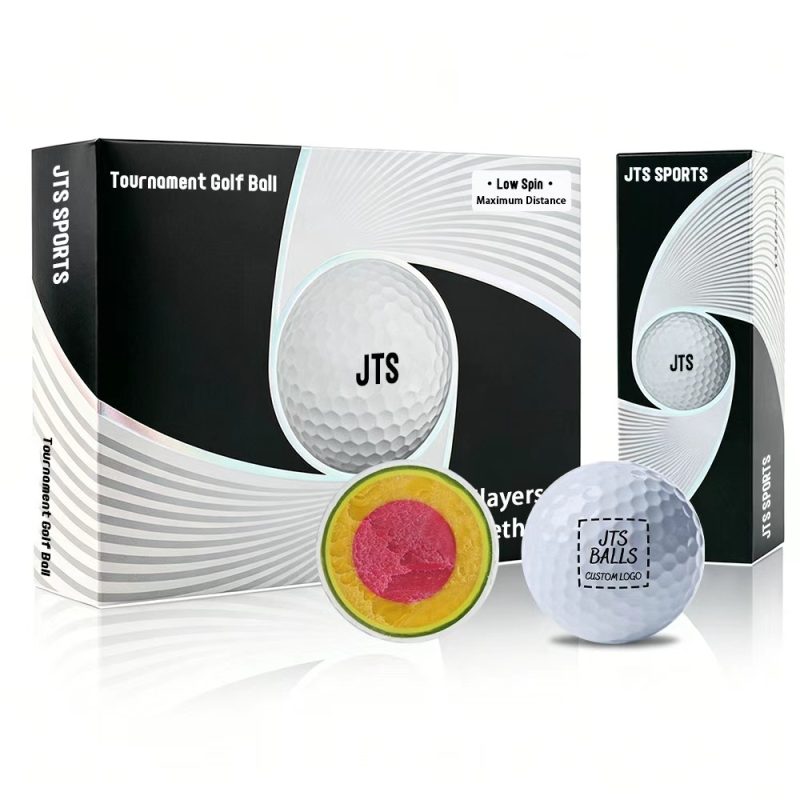
Custom golf ball packaging works best when the sleeve and dozen box carry the longer explanation: construction, cover material, feel, intended use and the brand story. The ball itself can stay clean and recognizable.
This also matters online. A customer looking at product photos should be able to understand the difference between models without reading a paragraph hidden at the bottom of the page. A clear front panel, side panel and sleeve design can do a lot of that work before the customer scrolls.
A corporate event order and a retail product should not look the same
A company golf day may only need a clean logo, event name and a simple sleeve that feels presentable when it is handed to guests at registration. A retail golf ball has a different job. It may sit beside established products in a pro shop, so the packaging needs to explain why someone should choose it again after the event is over.
The same applies to club shops. A member may happily buy a logo golf ball as a souvenir once. To buy it again, they need to know what kind of ball it is and whether it suits the way they play.
This is where a custom order becomes more than promotional merchandise. The ball has to work as a product first, and the branding has to make that product easier to understand.
The first sample should be handled like a customer would handle it
A digital proof is useful for checking placement, but it cannot tell you everything.
Open the sleeve. Turn the ball in your hand. Check whether the logo feels too large or too small. Put the ball beside the box and see whether the colors actually match. Take it outside and look at the print in daylight. Then hit it.
If the package is intended for a shelf, stand a few feet away and ask whether the model name and main benefit are still easy to understand. If the ball is for an event, place it in the gift bag and see whether the logo is still visible when the guest first opens it.
JTS Sports can provide custom sample balls before mass production. That sample stage is the right time to confirm print position, artwork scale and the overall relationship between the ball and the packaging.
Reorders get easier when the first order is documented properly
A successful first run often creates a second problem: six months later, someone wants the same ball again and nobody remembers the exact logo size, print position or package revision.
Keep one approved physical sample and a simple production record with the ball model, artwork file, print position, color reference and packaging version. Photograph the finished sample as well.
This is especially useful for wholesale golf balls or repeat club orders because it reduces the chance that a reorder slowly drifts away from the product customers already recognize.
A finished custom golf ball should feel obvious, not over-designed
The strongest custom golf ball products usually look simple because the decisions were made before production, not because nothing was considered.
The ball has a clear role. The logo is readable. The packaging explains what the ball is. The sample looks the way the final order is expected to look. And when the customer takes the ball out of the sleeve, there is no disconnect between the brand promise and the product in their hand.
That is the standard worth aiming for: not a generic ball hidden behind attractive graphics, but a golf ball people can understand, play and order again.
Frequently Asked Questions
What should I put on a custom golf ball?
Keep the ball itself simple. A main logo, model name, number or alignment mark usually works better than trying to fit a long message into one small print area. More detailed product information can go on the sleeve or box.
Can custom golf balls have printing on more than one side?
Yes, depending on the ball and print method. Using separate print positions can help keep the main logo clear while adding an event mark, second logo or model information elsewhere on the ball.
What is the best artwork format for golf ball printing?
A clean, high-resolution or vector logo is the easiest starting point. If the original design contains very small text or fine detail, it may need to be simplified before printing so the mark stays readable across the dimples.
Can golf ball packaging be customized too?
Yes. JTS Sports offers custom packaging options in addition to custom golf ball printing. Packaging is useful for carrying the product details and brand message that do not fit comfortably on the ball itself.
Should I request a sample before ordering custom golf balls in bulk?
Yes. A physical sample lets you check logo size, position, color, ball feel and the way the finished product works with the packaging before committing to a larger order.