
If you follow PGA Tour coverage or weekend amateur tour events across North America, you will notice a clear divide in golf gear conversations. On one side sit the premium tour balls from well-known brands, priced at a premium and marketed toward low-handicap players and tour professionals. On the other side, a fast-growing category quietly gains traction: OEM and private-label golf balls, built to strict technical specs but without the luxury brand markup.
For club buyers, corporate event planners, mid-handicap golfers and wholesale resellers, the question is no longer simply “which pro ball should I buy.” It has become: can a well-engineered OEM golf ball deliver reliable performance, match key tour-level specifications, and offer far better value for volume orders?
With amateur golf participation rising and demand for custom printed golf balls surging ahead of the summer tournament season, understanding the difference between Surlyn and Urethane covers, construction layers, compression and dimple design has never been more important. In this guide, we break down the technical specifications of multi-layer OEM golf balls, compare Surlyn against Urethane cover materials, map each model to different swing speeds and handicap levels, and explain why many course operators and golf retailers are turning to factory-direct golf ball options in 2026.
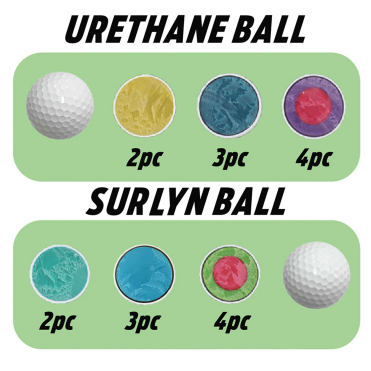
1. Golf Ball Construction Basics: 2-Piece, 3-Piece and 4-Piece Designs
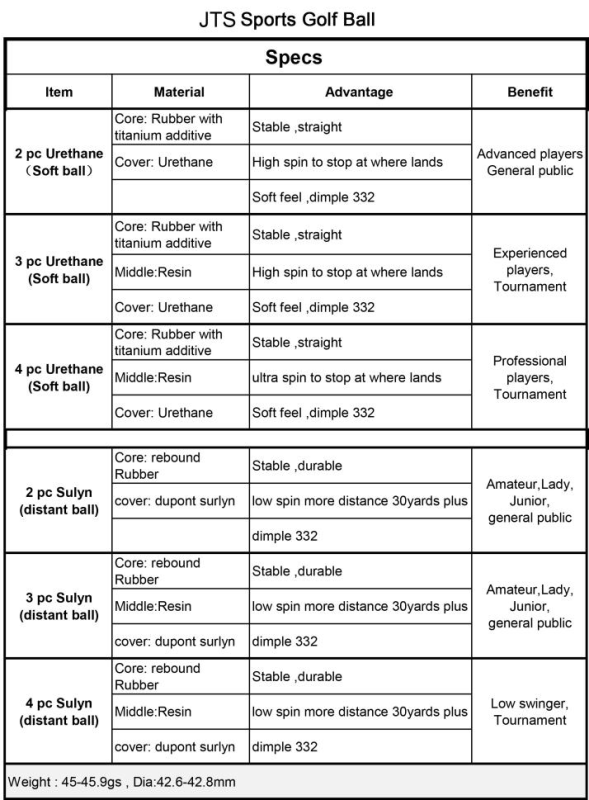
To judge any golf ball fairly, you first look at its construction. Most budget-friendly distance balls are simple two-piece designs, while tour-grade performance balls move into three-piece and four-piece constructions. Our OEM lineup covers all three tiers, with consistent base dimensions across the range: 332 dimples, weight controlled between 45g and 45.95g, outer diameter from 42.6mm to 42.8mm, and a 1mm cover thickness. These baseline measurements keep the balls within USGA conforming standards, critical for anyone playing competitive amateur golf.
The 2-piece Surlyn model is built around a solid rubber core with a Dupont Surlyn cover. Hardness sits at 83±5, with compression between 89% and 92%. This is a classic distance-focused construction: firm, low spin off the driver, durable against scuffs, and forgiving for players with moderate swing speeds. It holds up well on public courses, in windy conditions, and for golfers who prioritize straight flight and value over greenside spin.
Stepping up to the 3-piece Surlyn version adds an extra resin mantle layer between the rubber core and Surlyn cover. Compression rises to 94%–97%, creating tighter energy transfer at impact. The extra mantle layer reduces unwanted side spin and improves consistency, making it a popular upgrade for mid-handicap golfers who want more control without moving to a high-priced urethane tour ball.
At the top of the Surlyn range sits the 4-piece Surlyn model, with compression reaching 100%–110%. This firmer construction targets faster swing speeds, delivering lower spin off the tee and stable ball flight. For those who regularly carry driver speeds above 95mph but do not want the soft cover and higher cost of urethane, the four-piece Surlyn fills a clear gap in the market.
Switching over to urethane-covered models changes the playing character entirely. Urethane is the same cover material used on tour premium balls, offering much softer feel and significantly higher greenside spin. The 2-piece urethane comes in at 58±5 hardness and compression of 68%–71%, creating a noticeably softer feel around the greens. The 3-piece urethane pushes compression to 80%–90%, balancing driver distance with approach spin, while the 4-piece urethane lands at 63±5 hardness and 98%–100% compression, mirroring the compression profile of many tour-level four-piece urethane balls.
2. Surlyn vs Urethane: Which Cover Material Fits Your Game?
The single biggest decision when choosing an OEM golf ball comes down to cover material: Surlyn (ionomer) or Urethane.
Surlyn is known for toughness. It resists cuts, scuffs and abrasion from cart paths, rough and hard course conditions. It is firmer, produces less spin on full shots, and delivers longer overall distance for moderate swing speeds. For high-handicap players, casual weekend golfers, range balls, and bulk course inventory, Surlyn remains the practical workhorse. It costs less to produce, holds up over multiple rounds, and does not demand perfect swing mechanics to perform consistently.
Urethane, by contrast, is the performance cover. It is softer, grips the clubface on wedge shots, and generates the spin that lets pros stop the ball quickly on firm greens. The trade-off is durability: urethane scuffs more easily, and it requires sufficient swing speed to compress properly. For single-digit handicappers, better amateurs, and anyone looking for tour-like short-game feedback, urethane becomes worth the investment.
What surprises many golfers is that our OEM urethane options follow the same layered logic as premium branded balls. The 4-piece urethane uses a rubber core, resin mantle layers and a cast urethane cover, built to replicate the launch and spin characteristics of expensive tour balls, but without the retail brand premium.
When matching specs to players, the rule of thumb becomes clear: slower swing speeds and higher handicaps generally get better value from Surlyn-covered balls. Faster swing speeds, lower handicaps and players focused on wedge spin will benefit more from urethane.
3. Matching OEM Golf Ball Specs to Handicap and Swing Speed
One advantage of working with factory-direct OEM golf balls is the ability to match technical specifications directly to player profiles, rather than choosing based on marketing names and colorways.
For high-handicap golfers, slower swing speeds and inconsistent contact, the 2-piece Surlyn is the logical starting point. Its firm cover, moderate compression and low spin help straighten out errant drives and reduce lost balls. It is also an excellent choice for corporate giveaways, driving range inventory and bulk club sales.
Mid-handicap golfers often sit in the crossover zone. Many will appreciate the 3-piece Surlyn for tighter dispersion off the tee, while those willing to spend a little more for short-game feel can step into the 2-piece or 3-piece urethane. The 3-piece urethane balances compression and spin, making it a popular pick for amateur tournament players looking to upgrade without jumping to big-brand tour ball prices.
Low-handicap and faster swing players can look at the 4-piece urethane model. Its high compression and soft urethane cover deliver the firm core for distance and the grippy cover for greenside control. In practice, it performs similarly to premium tour balls for players who can load the ball properly at impact.
For wholesale buyers and custom order clients, this tiered lineup also makes assortment planning simple. A golf shop or resort can stock three tiers: value Surlyn for everyday play, mid-tier 3-piece for regular club golfers, and urethane performance models for better players. Add custom logo printing, and these OEM balls become ideal for member gifts, corporate outings and tournament swag.
4. The Value of OEM and Custom Wholesale Golf Balls in 2026
The conversation around golf balls often leans heavily toward big brand names seen on the PGA Tour, but the amateur and wholesale market operates by a different set of priorities: consistent specs, reliable quality control, competitive pricing, and customizability.
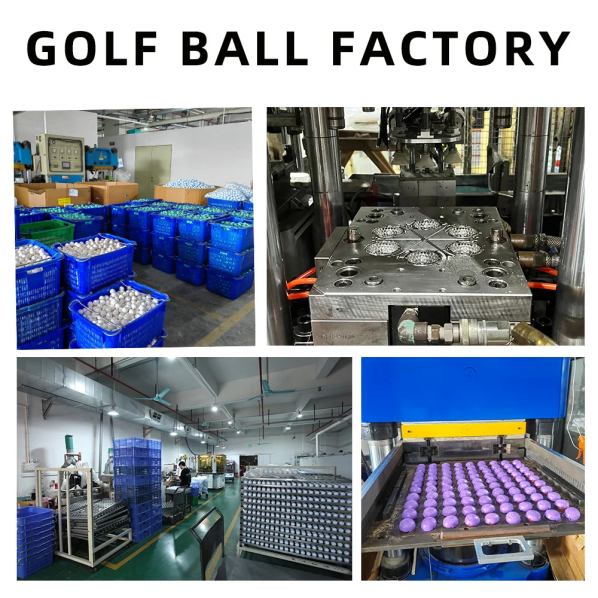
Every ball in our OEM range adheres to fixed manufacturing standards: 332 dimples, tight weight tolerance, standardized diameter and cover thickness. For importers, distributors and golf course operators, consistency from batch to batch is far more important than a logo on the side. When you order private-label golf balls, you control the branding, the packaging and the price point you bring to market.
Custom printed golf balls remain one of the most steady-selling golf accessories each summer. Corporate clients, charity tournaments, country clubs and golf trip organizers regularly look for volume orders with custom logos. Our production workflow includes digital proofs, color matching and flexible minimum order quantities, bridging the gap between factory manufacturing and finished branded product.
As amateur tournament calendars fill up across the United States, Europe and Australia, demand for conforming, consistent, affordable performance golf balls continues to rise. Many golfers are learning that brand prestige does not always equal better performance for their swing. An OEM multi-layer Surlyn or urethane ball, built to clear technical specifications, can be a smarter choice for most recreational players.
Conclusion
Watching professionals compete on television makes it easy to associate premium performance with premium brand names. But when you look beyond the logo and examine compression, cover material, layer construction and dimple design, the technical story becomes more nuanced.
2-piece Surlyn, 3-piece Surlyn, 4-piece Surlyn, and their urethane counterparts each serve a clear purpose, mapped to different swing speeds, handicap levels and budgets. For wholesale buyers, custom branding clients and everyday golfers, OEM golf balls offer a compelling alternative: conforming to standards, built on proven constructions, and priced without the luxury brand markup.
As you shop for golf balls this season, look past the marketing and toward the specifications that actually matter. Whether you need durable distance balls for the range, consistent mid-tier balls for club competition, or urethane performance models for low-handicap play, there is a factory-direct option built to match your game.